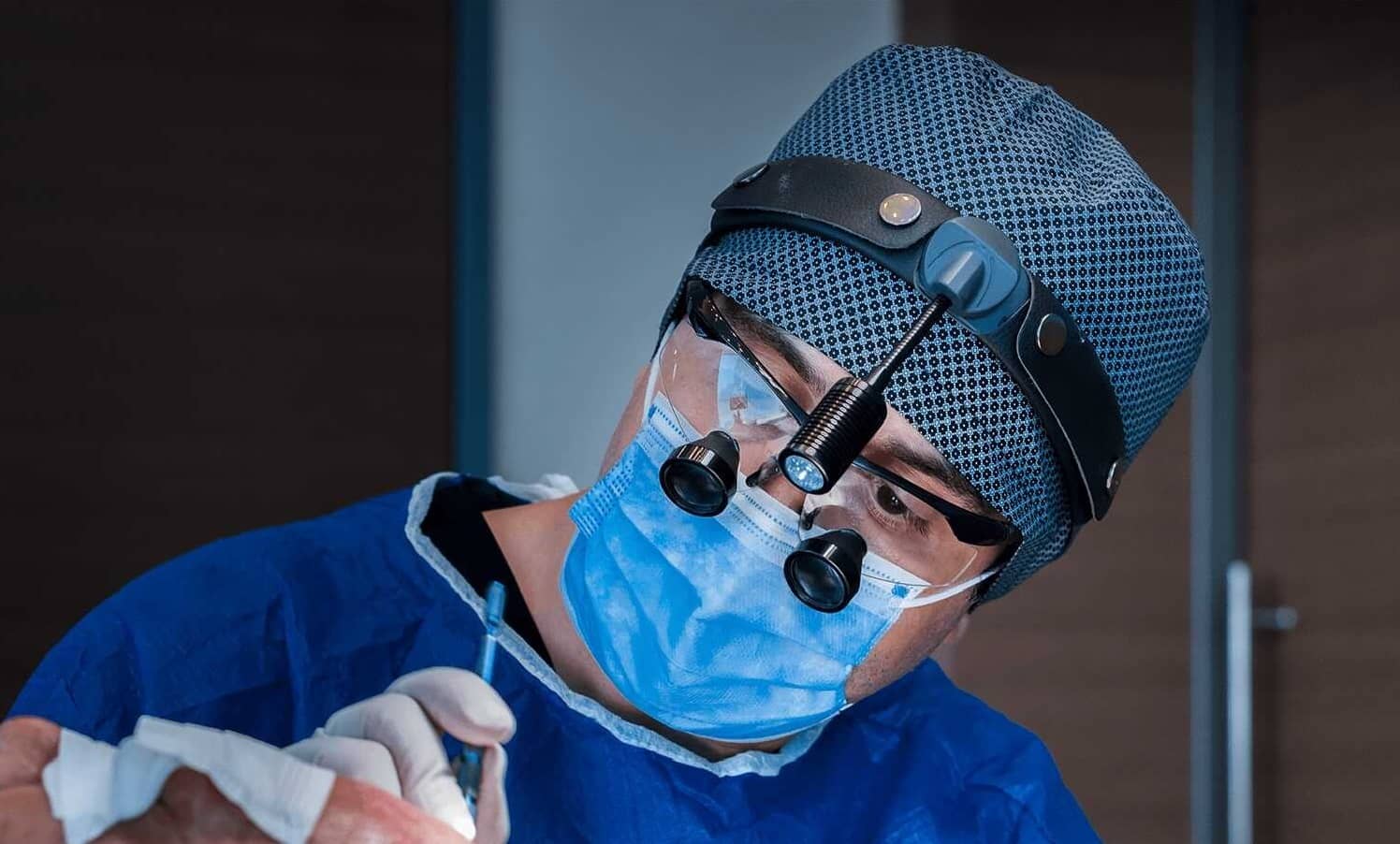

A hair transplant is a medical procedure used to restore hair in areas affected by hair loss. During the procedure, healthy hair follicles are taken from the back or sides of the scalp (the donor area) and implanted into areas where hair is thinning or missing. Because these follicles are genetically resistant to dihydrotestosterone (DHT), the hormone responsible for pattern hair loss, the results are typically long-lasting.
Modern graft extraction
Follicular Unit Extraction (FUE)
FUE is a minimally invasive method in which individual hair follicles are extracted using a micro-punch tool. This technique does not require stitches and leaves only small, barely visible scars.
Because follicles are extracted individually, the procedure is more time-intensive but allows for precise harvesting. Recovery is generally faster, and patients can resume normal activities sooner compared to older methods.
Protected Follicles
Direct Hair Implantation (DHI)
DHI is an advanced variation of FUE. After extraction, follicles are implanted directly into the scalp using a specialized implantation tool. This allows for greater control over the depth, angle, and direction of each graft.
The main advantage of DHI is precision. It is particularly useful for creating natural hairlines and increasing density in specific areas.
Strip Surgery
Follicular Unit Transplantation (FUT)
FUT, also known as strip surgery, involves removing a strip of scalp from the donor area and dissecting it into individual grafts. While effective, it is used less frequently today due to longer recovery times and the presence of a linear scar.