



Medically reviewed by Dr. Levent Acar, MD
Founder & Lead Hair Transplant Surgeon
Updated on: September 17, 2026
If you’ve ever typed “what curl type do I have” into Google after staring at your hair in the mirror, you’re not alone. Curl identification traces back to a system popularized by hairstylist Andre Walker, later expanded by others into the fuller 2A to 4C scale used today. It’s since become the everyday language people use to talk about texture, shrinkage, and routines, from loose 2A waves to tightly coiled 4C hair.
This guide walks through all nine curl types, shows you how to tell adjacent types apart (like 2B vs 2C, or 3B vs 3C), and gives you a simple at-home method to check your own pattern. It’s meant as a practical styling reference, not a medical classification; more on that distinction below.
Curly hair types range from 2A (loose waves) to 4C (tight coils), and identifying your exact pattern helps you choose the right care and styling approach.
This guide explains the full curl type chart, shows how to find your curl type at home, and breaks down the key differences between each pattern, from soft waves to dense coils.
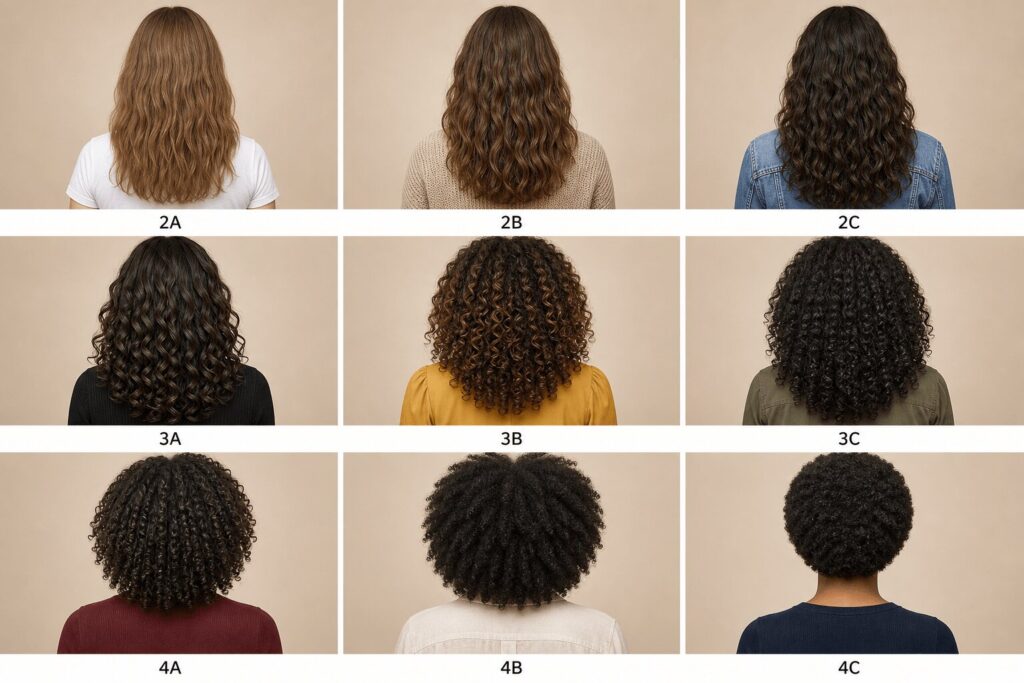
What Are Curly Hair Types? (Type 2, 3, and 4 Explained)
The 2A to 4C system is a widely used consumer haircare framework, not a medical or dermatological classification. It was popularized to help people shop for products and choose routines suited to their texture. It doesn’t measure hair health, the physiological strength of the hair follicle, or scalp condition, and it isn’t used clinically to diagnose anything.
At a high level:
- Type 2 (wavy): S-shaped bends, ranges from barely-there waves to defined waves with more body.
- Type 3 (curly): Springy, well-defined loops or corkscrews, ranging from loose curls to tight, dense ones.
- Type 4 (coily): Tightly coiled or zig-zag pattern, often with significant shrinkage; the tight bends in the strand can also make it more prone to dryness and breakage if not handled gently.
Letters A, B, and C within each type describe curl diameter and definition, A being the loosest or widest curl in that family, C being the tightest or most tightly packed.
Curly Hair Types Chart (2A to 4C at a Glance)
Curl types range from 2A (loose waves) to 4C (tight coils), with each type defined by curl shape, thickness, and shrinkage level.
Type | Pattern | Appearance | Common Needs |
|---|---|---|---|
2A | Loose S-waves | Barely-there wave, flattens easily | Lightweight products, avoid heavy oils |
2B | Defined waves | Waves start mid-length, some frizz | Light curl cream, texturizing spray |
2C | Strong waves/loose curls | Waves close to root, thicker strands | Curl-defining cream, frizz control |
3A | Loose curls | Large, springy loops, shiny | Curl cream, minimal heat |
3B | Springy curls | Tighter loops, more volume | Leave-in conditioner, curl gel |
3C | Tight corkscrews | Densely packed, voluminous | Deep conditioner, anti-frizz cream |
4A | Soft coils | Defined S-pattern coils, shrinkage | Moisture-rich leave-in, sealing oil |
4B | Z-pattern coils | Sharper angles, less defined curl | Heavy cream, protective styling |
4C | Tight coils | Little visible pattern, high shrinkage | Deep moisture, gentle detangling |
In simple terms: Type 2 hair is wavy, Type 3 is curly, and Type 4 is coily, with tighter patterns and more shrinkage as the number increases.
Quick Curl Type Finder
Not sure where to start? A rough shortcut:
- Hair falls mostly straight but bends near the ends: likely Type 2
- Hair forms visible loops or spirals when wet: likely Type 3
- Hair coils tightly and shrinks noticeably when dry: likely Type 4
From there, the “A/B/C” distinction usually comes down to how tight and defined the coil is, ranging from looser and wider (A) to tighter and denser (C).
Type 2 Wavy Hair: 2A, 2B, and 2C
2A Hair

2A hair has loose, barely-there S-waves, usually starting around the mid-shaft rather than at the root. It tends to be fine and can look almost straight until you add texture or product. Frizz is generally mild, but the wave pattern flattens easily under product weight. A lightweight mousse or texturizing spray tends to work better than rich creams. A common mistake is applying heavy oils that weigh the wave down and make it look limp.
2B Hair

2B waves are more defined, often starting closer to mid-length with a slight bend near the crown. This type can show more frizz than 2A, especially in humidity. A light curl cream or sea-salt spray can help enhance definition without heaviness. People with 2B hair often over-brush when dry, which breaks up the wave pattern and increases frizz.
2C Hair

2C is the most defined of the wavy types, with waves that start near the root and sometimes verge into loose curls. Strands are typically thicker, and this type is more prone to frizz than 2A or 2B. A curl-defining cream applied to damp hair helps hold the pattern. A frequent mistake is treating 2C like straight hair by brushing it dry, which disrupts the natural wave.
- Callout: 2A vs 2B Hair: The main difference is where the wave begins and how much texture is present. 2A is looser and often flatter at the crown, while 2B shows a more visible bend starting closer to the mid-lengths, with slightly more volume overall.
- Callout: 2B vs 2C Hair: 2C hair tends to have thicker strands and waves that start nearer the root, giving it more body and a curlier appearance than 2B, which usually looks more like a soft bend than a defined curl.
Type 3 Curly Hair: 3A, 3B, and 3C
3A Hair

3A curls are large, loose loops, often described as “spiral” curls with a shiny appearance. They tend to be looser near the crown and can lose definition throughout the day. A curl cream or lightweight gel helps maintain shape without stiffness. Over-washing can strip natural oils and leave 3A curls looking dull or frizzy.
3B Curls
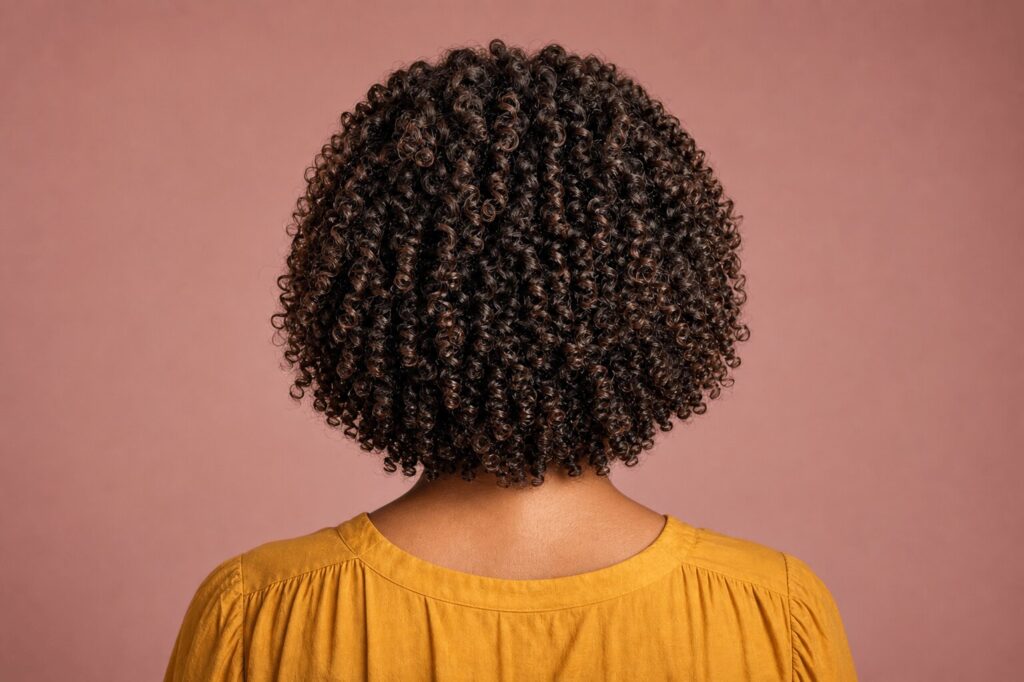
3B curls are springier and tighter than 3A, with more visible volume and a “corkscrew” bounce. Shrinkage is more noticeable, and curls can clump unevenly without the right products. A leave-in conditioner followed by a curl-defining gel often supports better clump formation. A common mistake is skipping leave-in conditioner, which can leave curls dry and prone to frizz.
3C Hair
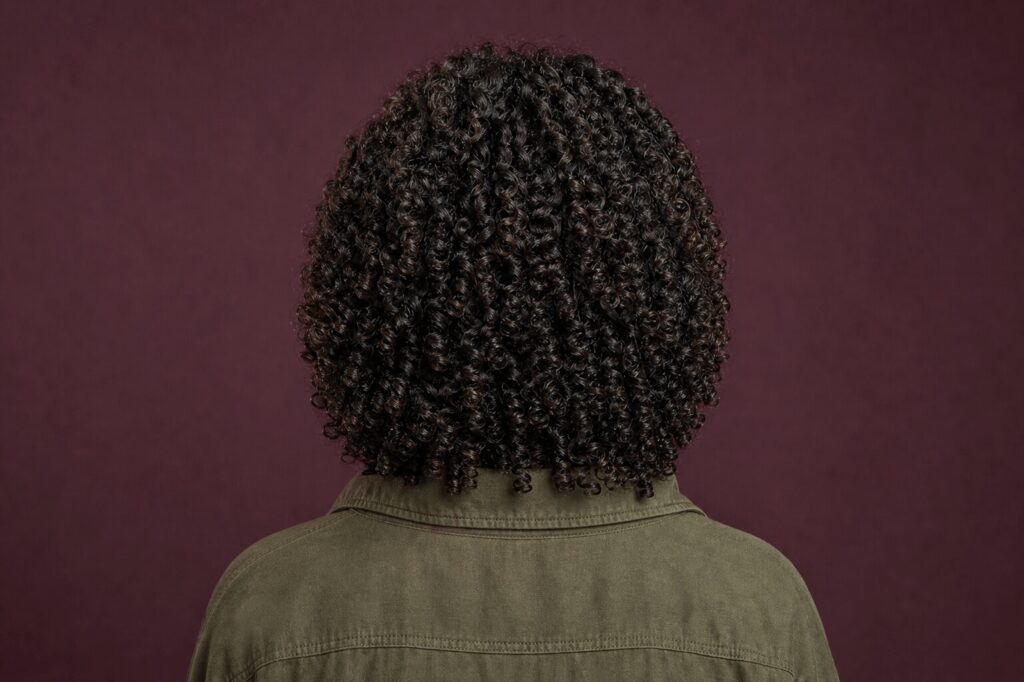
3C hair features tightly packed corkscrew curls, often with significant volume and shrinkage. Because of the tighter bends in the hair shaft, this type can be more prone to breakage than 3A or 3B if handled roughly when dry. Deep conditioning treatments and gentle detangling (usually with fingers or a wide-tooth comb, on wet hair) are commonly recommended. Rough towel-drying is a frequent culprit behind frizz and breakage in this type.
- Callout: 3A vs 3B Curls: 3A curls are looser, larger, and often shinier, while 3B curls are tighter, springier, and show more shrinkage and volume once dry.
- Callout: 3B vs 3C Curls: 3C curls are more tightly coiled and densely packed than 3B, with noticeably more shrinkage and a higher tendency toward dryness and frizz.
Type 4 Coily Hair: 4A, 4B, and 4C
4A Hair

4A hair has a well-defined S-pattern coil, generally the most defined pattern within Type 4. It has noticeable shrinkage but usually retains a visible curl shape when stretched. Moisture-rich leave-in conditioners and sealing oils help lock in hydration. A common misstep is using products meant for looser curl types, which often don’t provide enough moisture.
4B Hair

4B hair has a less defined, more angular “Z” pattern rather than a clear S-shape, with a fluffier, less uniform appearance. It typically shows more shrinkage than 4A and can be more prone to dryness. Rich, creamy leave-ins and protective styles are commonly used to reduce manipulation and retain moisture. A frequent mistake is detangling dry hair, which increases breakage risk.
4C Hair

4C hair has the tightest coil pattern, often with little visible curl definition and the highest degree of shrinkage among all types. The tighter bends along each strand create more points of mechanical stress, which is why 4C hair is often treated as more prone to breakage when handled roughly or over-manipulated. If you are already struggling with snapped strands, learning how to fix broken hair can help you protect fragile ends. Deep conditioning, gentle detangling on wet or damp hair, and minimizing heat styling are widely recommended approaches. A common mistake is aggressive daily brushing, which can lead to unnecessary breakage over time.
- Callout: 4A vs 4B Hair: 4A shows a more visible, springy coil pattern, while 4B has a fluffier, less defined “Z” shape with less visible curl definition when stretched.
- Callout: 4B vs 4C Hair: 4C hair typically shows the least visible curl pattern and the highest shrinkage of the two, making it often more delicate and more reliant on consistent moisture.
How to Identify Your Curl Pattern at Home

Curl pattern is easiest to assess on clean hair that’s been allowed to air-dry naturally, without heat styling, brushing, stretching, or curl manipulation, since any of these can temporarily disguise your natural pattern.
- Wash with a gentle, sulfate-free cleanser and avoid heavy conditioners that may weigh curls down for this test.
- Apply little to no styling product so the natural pattern isn’t altered.
- Let hair air-dry completely without touching, scrunching, or brushing it while wet.
- Once fully dry, examine sections from different areas, including the crown, sides, and nape, since curl pattern often varies across the head.
- Waves indicate Type 2, defined curls indicate Type 3, and tight coils indicate Type 4.
This method won’t give you a precise scientific measurement, but it offers a realistic sense of your natural pattern without external interference.
3B vs 3C vs 4A Hair: What’s the Difference?
The difference between 3B, 3C, and 4A hair comes down to curl tightness, volume, and shrinkage.
3B hair has springy, well defined curls with noticeable volume and bounce. 3C hair forms tighter corkscrew curls that are denser and more compact. 4A hair shifts into coily patterns with smaller, tighter loops and more visible shrinkage.
In simple terms, curl patterns become tighter and more compact as you move from 3B to 4A, often requiring more moisture and gentle handling.
Can You Have More Than One Curl Type?
Yes, this is extremely common. Many people have looser waves at the crown, tighter curls near the temples, a different pattern at the nape, or straighter texture at the ends (often due to old damage or previous heat or chemical treatments). It’s normal for a single head of hair to include two or even three adjacent curl types rather than one uniform pattern.
Curl Pattern vs. Hair Texture, Density, and Porosity
These four terms often get used interchangeably, but they describe different things:
- Curl pattern: The shape of the strand (wave, curl, or coil), which is what the 2A to 4C system describes.
- Texture: The thickness of an individual strand (fine, medium, or coarse), independent of curl pattern.
- Density: How much hair you have per square inch of scalp (low, medium, high).
- Porosity: How easily hair absorbs and retains moisture, which you can read about in depth in our guide on low vs high porosity hair.
Two people can share the same curl type but need very different routines because their texture, density, or porosity differ. This is part of why curl-type charts are a starting point, not a complete routine prescription.
Best Products and Routines by Curl Type
Because porosity, density, strand thickness, climate, and styling habits all affect what works, the guidance below reflects general tendencies rather than fixed rules.
Curl Type | Often Works Well | Often Best Avoided |
|---|---|---|
2A–2B | Lightweight mousse, texturizing spray | Heavy oils, rich butters |
2C–3A | Curl cream, light gel | Over-cleansing with strong sulfate shampoos |
3B–3C | Leave-in conditioner, curl-defining gel | Rough towel-drying, over-brushing |
4A–4B | Rich leave-in, sealing oils | Frequent heat styling |
4C | Deep conditioner, heavier creams | Daily brushing when dry |
Sulfate-heavy shampoos can be drying for many curl and coil patterns, especially for higher-porosity hair. This isn’t unique to any single type, though looser waves are sometimes over-cleansed because people assume they need less specialized care. Many people with curly or coily hair find that reducing wash frequency, detangling on wet or damp hair, and sealing in moisture with an oil after a water-based leave-in helps reduce frizz and breakage, though individual results vary based on the factors above.
Common Curl Type Mistakes to Avoid
- Brushing dry curls or coils, which disrupts pattern and increases frizz and breakage risk.
- Using products meant for a much looser or tighter type, which often leaves hair either weighed down or under-moisturized.
- Over-washing with harsh formulas. While many wonder, can the wrong shampoo cause hair loss?, sulfate-heavy shampoos definitely strip natural oils across many curl types, particularly higher-porosity hair, leaving them dry and brittle.
- Skipping leave-in conditioner on curl or coil types that tend to run drier.
- Ignoring pattern variation across the head and applying a single routine to the whole scalp.
When Curly Hair Concerns Need More Than a Routine Change
Curl typing is useful for styling and product choices, but it isn’t designed to diagnose hair thinning, scalp conditions, or medical causes of shedding. Some curl-related changes, like shrinkage, tangling, or breakage at the ends, are a normal part of having textured hair and usually respond to routine or product adjustments.
However, persistent thinning, receding hairlineareas, or bald patches, particularly around the hairline or temples, can sometimes be linked to traction alopecia. This is a recognized dermatological condition caused by repeated tension on the hair follicles from tight braids, weaves, ponytails, or other pulling hairstyles. It is more frequently seen in people who wear tight styles commonly used with tightly curled or coiled hair, rather than being caused by curl pattern itself. Caught early, it is frequently reversible once tension is reduced; if it progresses to scarring, regrowth is generally not possible, which is why early attention matters.
If you’re noticing thinning or bald patches that seem different from normal curl shrinkage, it’s essential to understand the unique structural relationship between curly hair and hair transplant surgery. For those with tightly coiled textures, specialized approaches like an Afro hair transplant can safely restore density without damaging the surrounding follicles when styling changes alone aren’t enough.
FAQ: Curly Hair Types
What are the main curly hair types?
Curl types fall into three broad families: Type 2 (wavy), Type 3 (curly), and Type 4 (coily), each divided into A, B, and C based on how tight and defined the pattern is.
What curl type do I have?
The most reliable way is to wash your hair, apply minimal product, let it air-dry without touching it, and compare the resulting pattern to a reference chart, keeping in mind you may have more than one type.
Is wavy hair considered curly?
Wavy hair (Type 2) is generally grouped separately from “curly” (Type 3) and “coily” (Type 4) hair, since it has looser S-bends rather than defined loops or coils, though all three fall under the broader curly-hair umbrella in everyday use.
What is 2A hair?
2A hair has loose, barely-there S-waves that typically begin around the mid-length rather than the root, and tends to flatten easily under heavier products.
What is the difference between 2A and 2B hair?
2B waves are more defined and start closer to the mid-lengths with more visible bend and volume, while 2A is looser and flatter overall.
What does 3B curly hair look like?
3B hair forms springy, well-defined loops with noticeable volume and bounce, tighter than 3A but looser than the corkscrew curls typical of 3C.
What is coiled hair?
Coiled hair generally refers to Type 4 hair, which has tight coils or a zig-zag pattern and often shows significant shrinkage compared to its stretched length.
Can you have more than one curl type?
Yes, many people have different curl patterns across their head, such as looser waves at the crown and tighter curls near the temples or nape.
Can your curl pattern change over time?
Curl pattern can shift due to damage, chemical treatments, hormonal changes, or aging, so a pattern you had years ago may look different today.
What is the difference between curl pattern and hair porosity?
Curl pattern describes the shape of the strand, while porosity describes how easily hair absorbs and retains moisture; two hairs with the same curl pattern can have very different porosity levels.
What products should I use for my curl type?
General tendencies suggest lighter products (mousses, light creams) for looser waves and richer, moisture-focused products (leave-ins, sealing oils, deep conditioners) for tighter curls and coils, though individual porosity and density also matter.
When should curly hair breakage be checked by a specialist?
If thinning, bald patches, or hairline recession appear alongside routine breakage, rather than typical shrinkage or split ends, it’s worth scheduling a free consultation for a hair transplant in Turkey, to evaluate whether tension-related or other medical hair loss factors are involved.