



If you are considering a hair transplant, one of the first questions is usually simple: how many hair grafts do I need?
Most patients need somewhere between 1,000 and 4,000 grafts, but the right number depends on the size of the thinning area, the desired density, the donor area, hair thickness, hair loss pattern and long-term planning. A small hairline correction may need fewer than 1,500 grafts, while advanced hair loss can require 4,000 to 6,000+ grafts, sometimes across more than one session.
This guide explains what a graft is, how graft numbers are estimated, how many grafts are usually needed for the hairline, crown and full scalp, how Norwood stage affects planning, and why the highest graft number is not always the best treatment plan.
What is a hair graft?
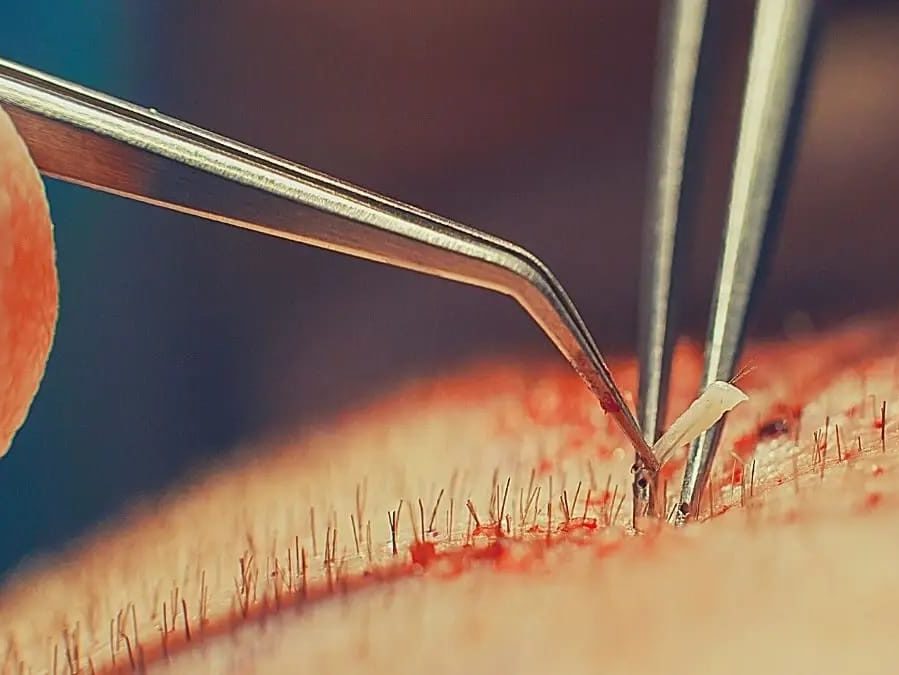
A hair graft is a small unit of tissue containing one or more hair follicles. In hair transplantation, grafts are usually taken from the donor area at the back and sides of the scalp, where hair is typically more resistant to androgenetic alopecia, also known as male pattern hair loss.
A graft is not the same as a single hair. Many grafts contain one to four hairs, depending on the patient's natural follicular units. This means that 3,000 grafts does not mean 3,000 hairs. In many patients, 3,000 grafts may contain roughly 6,000 to 8,000 individual hairs, although the exact number varies.
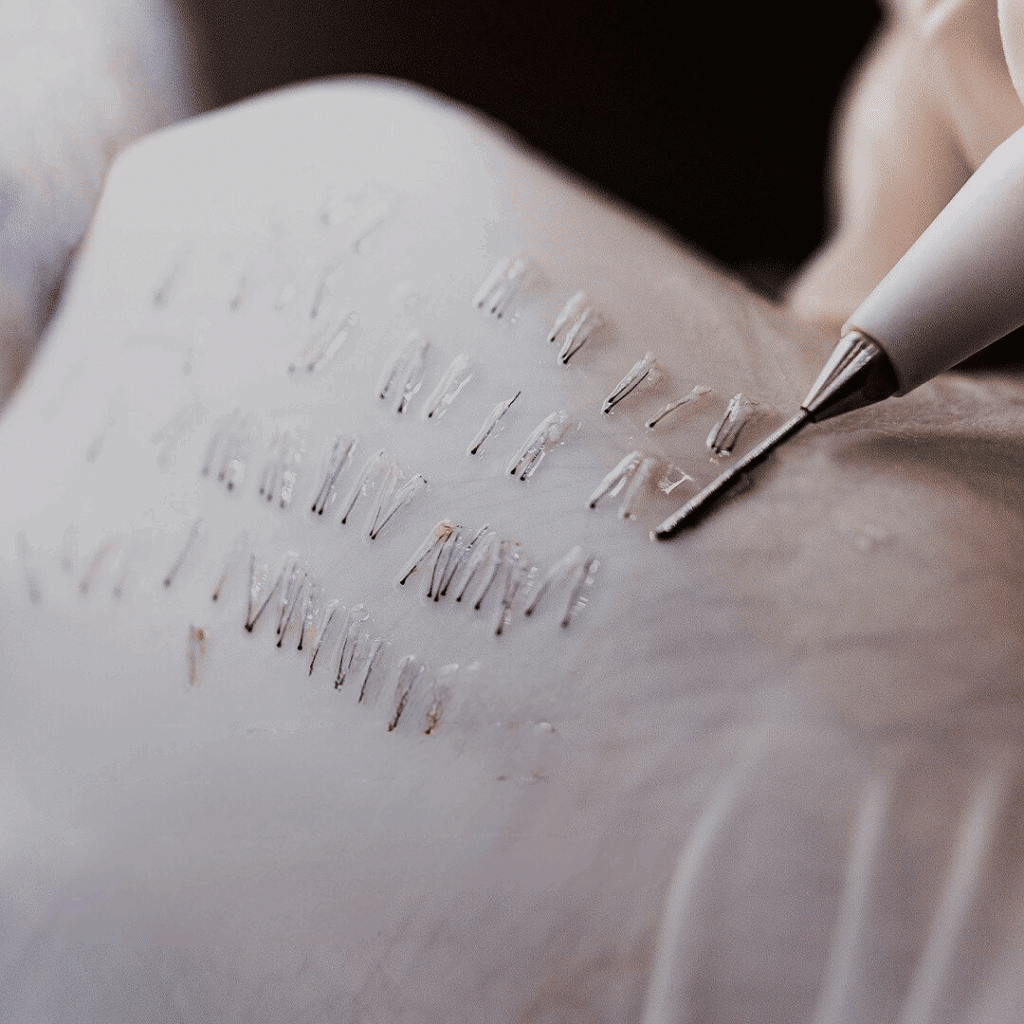
During FUE hair transplant, follicular units are extracted individually from the donor area and implanted into thinning or bald areas. With DHI hair transplant, grafts are placed using an implanter pen. With Sapphire FUE, channels are opened with a Sapphire blade before graft placement.
The number of grafts is important, but it is only one part of the result. Natural hairline design, graft survival, donor preservation, implantation angle and long-term hair loss progression matter just as much.
How many hair grafts do I need?
The number of grafts you need depends mainly on the surface area that requires coverage and the density needed to create a natural visual result. Small areas need fewer grafts. Larger areas, crown thinning and advanced Norwood patterns require more careful distribution because the donor supply is limited.
| Treatment area | Typical graft estimate | Planning note |
| Small temple correction | 500-1,000 grafts | Usually focused on softening early recession. |
| Receding hairline | 800-2,000 grafts | Requires careful single-graft placement at the front. |
| Hairline and frontal third | 1,500-3,000 grafts | Often gives the strongest cosmetic change because it frames the face. |
| Crown thinning | 1,500-3,500 grafts | The crown covers a wider surface area and can require conservative planning. |
| Front and crown combined | 3,000-5,000 grafts | Distribution must balance visual impact and donor preservation. |
| Advanced hair loss | 4,000-6,000+ grafts | May require staged treatment depending on donor capacity. |
These ranges are general estimates. A patient with thick, wavy hair may need fewer grafts to create the same visual coverage as someone with fine, straight hair. Scalp colour, hair colour, hair shaft thickness, curl pattern and donor density all affect the plan.
For a first estimate, you can also use the Hair Graft Calculator. A calculator can give orientation, but it cannot replace a medical assessment of the donor area, hair loss pattern and scalp condition.
How many grafts are needed for a receding hairline?
A receding hairline usually needs fewer grafts than full scalp restoration, but it requires greater precision. The hairline is highly visible, so the design must match the patient's age, face shape, temple pattern and likely future hair loss.

As a general guide, mild temple recession may need around 500 to 1,200 grafts. A more defined hairline transplant often requires 1,200 to 2,000 grafts. If the frontal third also needs density, the number may rise to 2,000 to 3,000 grafts.

Single-hair grafts are usually placed at the front edge to create a soft and natural transition. Multi-hair grafts are placed behind the hairline to build density. A hairline that is too low or too dense can look unnatural later if surrounding native hair continues to thin.
How many grafts are needed for the crown?
The crown can require more grafts than patients expect. This is because crown thinning often spreads in a circular pattern across a larger surface area. The hair also changes direction around the whorl, so graft placement must follow the natural spiral pattern.
A small crown area may need around 1,000 to 1,500 grafts. Moderate crown thinning often requires 1,500 to 2,500 grafts. Larger crown restoration can require 2,500 to 3,500+ grafts, depending on the surface area and target density.
The crown is often planned more conservatively than the frontal hairline. The front of the scalp usually has the greatest visual impact because it frames the face. If donor supply is limited, a surgeon may prioritise the frontal area first and treat the crown later. For more detail, see our guide to crown hair transplant.
How many grafts are needed for a full head of hair?
Patients often ask how many grafts are needed for a full head of hair. The answer depends on what “full” means. A hair transplant usually aims for a natural cosmetic improvement, not the exact density someone had as a teenager.
For moderate hair loss affecting the hairline, mid-scalp and some crown area, a plan of 3,000 to 4,000 grafts may be suitable. More advanced hair loss can require 4,000 to 6,000+ grafts. In severe Norwood VI or VII patterns, treatment may need to be staged because the donor area must be protected for future needs.
A good plan does not simply place as many grafts as possible. It places grafts where they create the strongest visual improvement while preserving donor capacity. In many patients, the most important areas are the hairline, frontal third and mid-scalp. The crown can then be treated if enough donor supply remains.
How many grafts per square inch are used?
Hair transplant density is often discussed in grafts per square centimetre or grafts per square inch. Natural scalp density is higher than transplanted density, but a natural-looking result does not always require recreating original density.
In many hair transplant plans, cosmetic density may be around 30 to 40 grafts per cm². Since one square inch is about 6.45 cm², this equals roughly 190 to 260 grafts per square inch. Some areas may be treated more densely, while others are treated more conservatively.
The hairline may need careful density and detailed single-graft placement. The crown often needs broader coverage across a larger area. Fine hair, strong hair-to-scalp contrast and straight hair may need more grafts for the same visual effect than thicker, wavy or curly hair.
Estimated grafts by Norwood stage
The Hamilton-Norwood scale is commonly used to describe male pattern hair loss. It is not a perfect graft calculator, but it helps estimate the size of the area that may need treatment.
| Norwood stage | Typical pattern | Estimated graft range |
| Norwood I | Minimal or no visible recession. | Usually no transplant needed. |
| Norwood II | Mild temple recession. | 500-1,500 grafts. |
| Norwood III | Deeper temple recession or clear frontal hairline loss. | 1,500-2,500 grafts. |
| Norwood III Vertex | Hairline recession with early crown thinning. | 2,000-3,000 grafts, depending on priority areas. |
| Norwood IV | Frontal loss and crown thinning with a remaining bridge of hair. | 2,500-3,500 grafts. |
| Norwood V | Larger frontal and crown areas with thinner separation between them. | 3,000-4,500 grafts. |
| Norwood VI | Extensive top-of-scalp hair loss. | 4,000-5,500 grafts, often with staged planning. |
| Norwood VII | Advanced hair loss with limited remaining donor reserves. | 5,000-6,000+ grafts if donor area allows, often staged. |
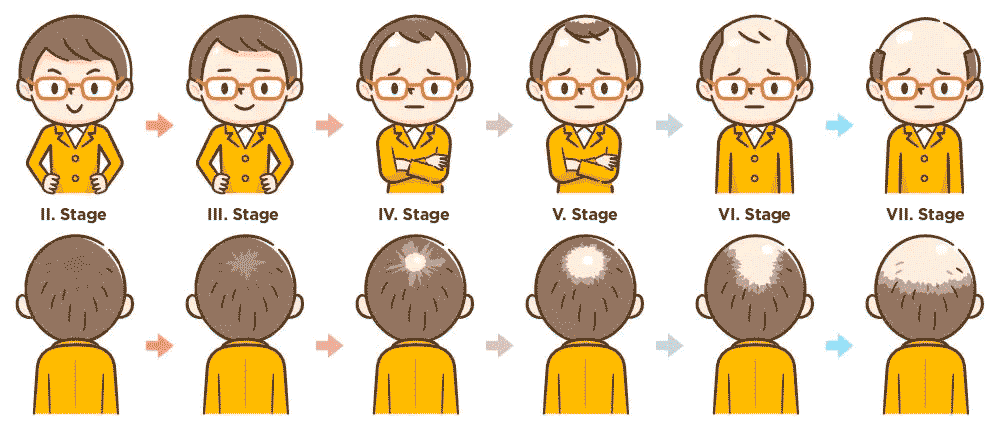
These figures are planning ranges, not guarantees. A Norwood IV patient with strong donor hair may need a different plan from another Norwood IV patient with fine hair, low donor density or ongoing diffuse thinning.
How do 3,000 grafts and 4,000 grafts compare?
A 3,000 graft hair transplant is often used for hairline, frontal-third and limited crown work. It can create a strong visual improvement when the hair loss area is moderate and the donor area is suitable.
A 4,000 graft hair transplant can cover a larger area or build more density in the frontal and mid-scalp regions. It may also support combined frontal and crown planning in selected patients. However, 4,000 grafts should only be used if the donor area can safely provide them without visible overharvesting.
Real patient examples can help users understand graft numbers more clearly. The Keiran Lee hair transplant case study is relevant for users researching 3,000 grafts, while the Adam22 hair transplant case study gives context for a 4,000+ graft procedure.
How much hair can be transplanted in one session?
The number of grafts that can be transplanted in one session depends on donor density, donor safety, the size of the team, the technique used, graft handling, operation time and the patient's scalp condition. Larger sessions can be possible in suitable candidates, but more grafts do not automatically mean a better result.

In many cases, a single session may involve 1,500 to 4,000 grafts. Some patients may be suitable for larger sessions, but the medical team must balance density, graft survival and donor preservation. In advanced hair loss, two staged procedures may be safer than trying to cover everything in one operation.
A staged approach can also make long-term planning easier. The surgeon can prioritise the hairline and front first, then review growth, donor area and future hair loss before deciding whether the crown or mid-scalp needs additional grafts.
What determines your exact graft count?
Your exact graft count is based on several medical and aesthetic factors. Two patients with the same Norwood stage may need different graft numbers because their hair characteristics, donor areas and goals are different.

Size of the thinning area
The larger the area, the more grafts are needed. A small temple correction may be a limited procedure, while front-to-crown restoration requires careful distribution across a much larger surface area.
Donor area capacity
The donor area is not unlimited. Removing too many grafts can make the back or sides of the scalp look thin. Donor planning should consider both the current procedure and possible future needs. Read more in our guide to the hair transplant donor area.
Hair thickness and curl
Thicker hair shafts usually create more coverage than fine hair. Wavy or curly hair can also provide better visual coverage because it occupies more space. This can reduce the number of grafts needed for a similar cosmetic effect.
Hair and scalp colour contrast
Dark hair on light skin usually shows more contrast, so the scalp may be more visible. Lower contrast between hair and scalp can make density appear better even with the same graft count.
Current and future hair loss
Male pattern hair loss can continue after surgery. A good graft plan should not only treat the current area but also account for likely future thinning. This is why very young patients or patients with unstable hair loss often need careful assessment before surgery.
Technique and placement strategy
Different methods can influence how grafts are placed, but the graft count still depends on the treatment area and donor supply. Technique should support the surgical plan rather than be used as a reason to overpromise density.
How does graft count affect hair transplant cost?
Graft count is one factor that influences cost, but it is not the only one. Technique, package contents, surgeon involvement, clinic standards, aftercare, accommodation and transfers can all affect the total price.
For many international patients, the practical question is not only how many grafts are needed, but what is included in the overall package. You can review current package information on our hair transplant cost in Turkey page.
Be cautious when comparing clinics only by graft number or low advertised prices. A high graft promise does not guarantee a better result. The more important question is whether the graft number is medically realistic, safe for the donor area and appropriate for the patient's long-term hair loss pattern.
Can too many grafts be a problem?
Yes. Too many grafts can be a problem if the plan exceeds what the donor area can safely provide or if grafts are packed into an area without enough attention to blood supply, spacing and long-term planning.
Potential problems with unrealistic graft numbers include:
- visible thinning or overharvesting in the donor area;
- lower graft survival if grafts are poorly handled or placed too densely;
- unnatural density distribution;
- not enough donor hair left for future hair loss;
- an aggressive hairline that does not age well.
More grafts can be useful when they are medically justified. They should not be used as the only measure of treatment quality.
How many grafts survive after a hair transplant?
Graft survival depends on surgical technique, graft handling, implantation accuracy, scalp condition and aftercare. A good clinic focuses on keeping grafts healthy during extraction, sorting, storage and implantation.
After surgery, transplanted hairs often shed before new growth begins. This early shedding does not automatically mean the grafts have failed. The visible hair shaft can fall out while the follicle remains in place and later produces new hair. If you want a detailed recovery overview, see our guide on what happens right after a hair transplant.
Growth usually develops gradually. Early growth may begin after a few months, while more visible density often appears between six and twelve months. Some crown cases can take longer to mature.
How should grafts be distributed for a natural result?
Natural results depend on distribution, not only total graft number. The hairline should not be built with thick multi-hair grafts at the very front. Single-hair grafts are usually used along the leading edge, while larger grafts are placed behind them to add fullness.
The frontal third often receives more visual priority because it frames the face. The mid-scalp supports the transition between front and crown. The crown may be treated more conservatively because it can consume many grafts without changing the face-framing effect as much as the hairline.
This is also why before-and-after examples are useful. They show how grafts are distributed in real cases, rather than only listing a number. You can review real patient outcomes on our hair transplant before and after page.
How can you get a more accurate graft estimate?
A reliable graft estimate requires assessment of the scalp and donor area. Photos can help, but a detailed evaluation should consider hair calibre, donor density, miniaturisation, hair loss pattern, age, family history and goals.
At Cosmedica Clinic, graft planning may include donor-area evaluation, hairline planning and technique selection. The aim is to estimate not only what can be done now, but what will still look natural as the patient ages.
To get a first estimate, use the Hair Graft Calculator. For a personalised assessment, you can start a free hair analysis or learn what to expect during a hair transplant consultation.
What is the key takeaway?
There is no single graft number that applies to every patient. A small hairline correction may need fewer than 1,500 grafts, while advanced hair loss can require 4,000 to 6,000+ grafts. The right number depends on the treatment area, donor capacity, hair characteristics, density goals and future hair loss risk.
A good hair transplant plan does not aim for the highest possible graft count. It aims for a natural-looking, sustainable result that uses the donor area responsibly. Graft numbers should support the plan, not replace proper planning.
FAQs about hair graft numbers
How many hair grafts do I need?
Most patients need between 1,000 and 4,000 grafts. A small hairline correction may need fewer grafts, while advanced hair loss can require 4,000 to 6,000+ grafts, sometimes across staged procedures.
How many grafts are needed for a receding hairline?
A receding hairline usually needs around 800 to 2,000 grafts. Mild temple recession may need less, while a larger frontal restoration can require 2,000 to 3,000 grafts.
How many grafts are needed for the crown?
A small crown area may need around 1,000 to 1,500 grafts. Moderate crown thinning often needs 1,500 to 2,500 grafts, while larger crown areas can require 2,500 to 3,500+ grafts.
How many grafts are needed for a full head of hair?
Moderate hair loss may require 3,000 to 4,000 grafts for a fuller appearance. More advanced hair loss can require 4,000 to 6,000+ grafts, depending on donor capacity and whether the treatment is staged.
How many hairs are in one graft?
One graft usually contains one to four hairs. This means the number of grafts is not the same as the number of individual hairs transplanted.
Is 3,000 grafts enough for a hair transplant?
3,000 grafts can be enough for many moderate hair loss cases, especially when treating the hairline, frontal third or limited crown thinning. It may not be enough for advanced front-to-crown baldness.
Is 4,000 grafts a lot?
4,000 grafts is a large hair transplant session. It can provide significant coverage in suitable candidates, but the donor area must be strong enough to support that number safely.
Can I get 6,000 grafts in one session?
Some patients may be suitable for very large sessions, but 6,000 grafts is not appropriate for everyone. Donor capacity, surgical safety, graft survival and long-term planning must be assessed first.
Do more grafts always mean better results?
No. More grafts do not automatically mean better results. Natural hairline design, correct graft distribution, donor preservation and graft survival are more important than using the highest possible number.
How can I calculate how many grafts I need?
You can use a hair graft calculator for a first estimate, but a reliable graft number requires a personalised assessment of the thinning area, donor density, hair characteristics and long-term hair loss pattern.
:::