



Medically reviewed by Dr. Levent Acar, MD
Founder & Lead Hair Transplant Surgeon
Updated on: September 01, 2026
If you’ve been keeping an eye on your hairline and wondering whether things have progressed, you might already be at Norwood 4, a stage where male pattern hair loss becomes clearly visible and harder to manage without professional help.
The good news is that this stage of the Norwood-Hamilton scale is well within the range of effective treatment, and a hair transplant at this point can deliver strong, natural-looking results. Here’s everything you need to know.
What Is the Hamilton Norwood Scale?
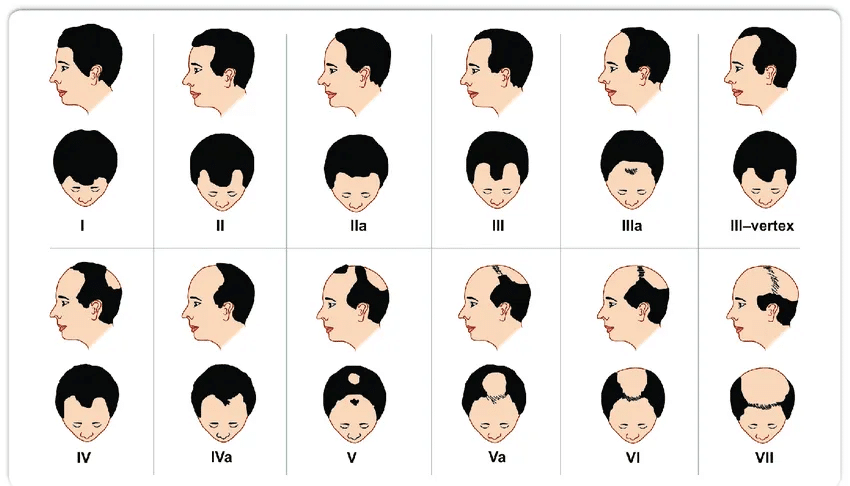
Before diving into Norwood 4 specifically, it helps to understand the system it comes from. The Norwood-Hamilton scale is the most widely used classification tool for male pattern baldness. It divides hair loss into seven main stages, from Stage 1, where there’s no visible loss, to Stage 7, which represents near-total baldness on top of the scalp.
Each Norwood stage describes a specific pattern of hair recession and thinning. Doctors use it to assess where a patient currently stands, predict future progression, and plan appropriate treatment.
What Does a Norwood 4 Hairline Look Like?
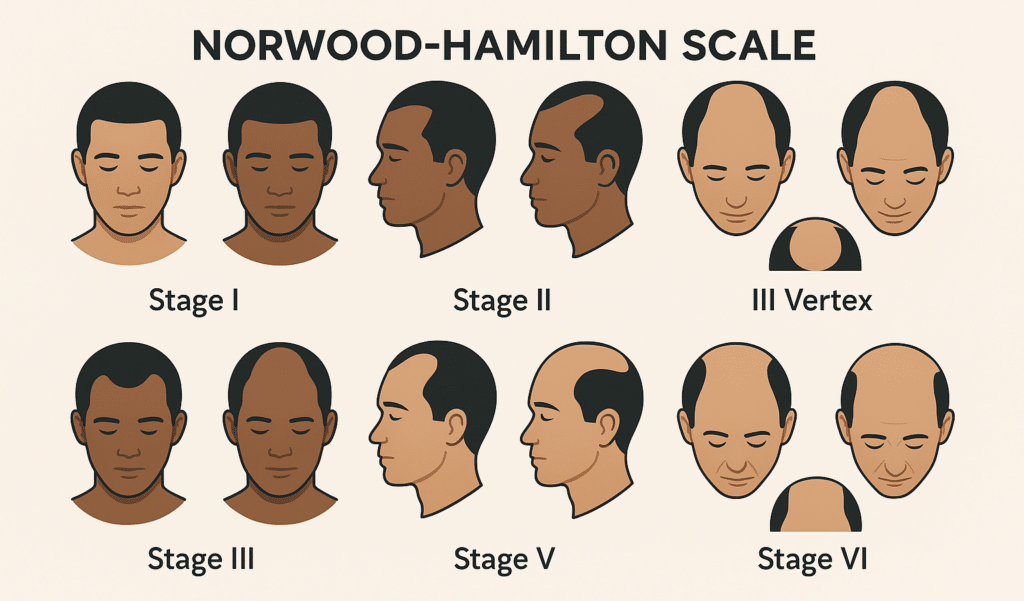
Norwood 4 hair loss is characterized by a clear and noticeable progression beyond the earlier stages. The pattern of hair loss at this point typically includes:
- A significantly receded hairline, pulled well back from the temples.
- A visible bald patch is developing at the crown.
- A bridge of hair still connects the front and back, but narrower than at Stage 3.
- Thinning across the mid-scalp area.
The receding hairline at Stage 4 is no longer something that you can easily disguise with styling. The gap between the frontal hairline and the crown bald spot is closing in, though they haven’t merged yet; that happens at Stage 5 and beyond.
There’s also a variant called Norwood 4A. In this version, the hairline recedes in a more uniform band across the top rather than from the temples inward. The crown is less affected, but overall coverage is still significantly reduced.
How Long Does It Take to Progress from Norwood 3 to Norwood 4?
The rate of progression through the stages of male pattern baldness varies widely between individuals. Some men move from Stage 3 to Stage 4 within a couple of years; others take five years or longer. There’s no fixed timeline.
Several factors influence progression:
- Genetics and family history
- Hormonal sensitivity
- Age
- Stress levels
- Lifestyle habits
If you’ve noticed a shift in your hairline over the past year or two, it’s worth getting a professional assessment sooner rather than later.
How Can You Treat Hair Loss at Norwood Stage 4?
At Norwood 4, most men are weighing up two treatment options: medical management and surgical restoration. The right approach depends on your goals, the stability of your hair loss, and whether you want to preserve existing hair, restore lost hair, or both.
Medical treatments
Medications won’t reverse existing hair loss at Stage 4, but they can slow or stop further progression, which matters a lot if you’re planning a transplant. The main options are:
- Finasteride: This prescription oral medication reduces DHT, the hormone responsible for shrinking hair follicles in genetically susceptible men. Effective at slowing progression in many patients.
- Minoxidil: A topical solution applied to the scalp that supports follicle activity and can help maintain remaining hair.
- PRP therapy: Platelet-rich plasma therapy uses growth factors from your own blood to stimulate hair follicles and support weaker areas.
Hair Transplant Surgery
For many patients, hair transplant Turkey has become the most effective long-term solution at this stage. It redistributes healthy follicles from the donor area to thinning zones.
Dr. Levent Acar at Cosmedica Clinic uses advanced methods such as the Micro Sapphire DHI technique to create natural density and refined hairline design.

How Many Grafts Are Needed for Norwood 4 Hair Loss?
The number of grafts depends on the size of the bald area, the density of the donor zone, and the look you’re aiming to achieve
On average, Norwood 4 hair restoration may require:
- 2,500–4,000 grafts for moderate coverage
- 4,000–5,000+ grafts for higher density results
The goal is not just coverage but natural blending with existing hair and long-term balance.
A proper assessment with an experienced specialist helps determine the exact graft plan for each patient.
To learn more about pricing and how graft count affects the overall cost of treatment, visit our Turkey hair transplant cost page.
What are Norwood 4 Hair Transplant Results Like?
Modern techniques have significantly improved outcomes for this stage of hair loss.
Hair transplant results follow a predictable timeline:
- Months 1–3: Transplanted hairs shed. This is completely normal, as the follicles are adjusting and entering a resting phase.
- Months 3–5: Early new growth begins. The hair is usually fine, soft, and less dense at first.
- Months 6–9: Noticeable improvement appears as the hair thickens and overall density increases.
- Month 12: Around 90% of the final result becomes visible, with clear shape and coverage.
- Month 18: You reach full hair growth, and the transplanted hair blends fully with natural hair for the final result.
Browsing real patient outcomes can make the process feel more concrete. The hair transplant Turkey before and after gallery at Cosmedica includes cases across different Norwood stages, which gives you a grounded sense of what’s achievable.
FAQ: Norwood 4 Hair Loss
Can I stop hair loss from progressing at Norwood 4?
You can slow it down. Medications like finasteride have clinical evidence supporting their use in reducing further loss. But no treatment can permanently halt genetic hair loss. A transplant restores what’s gone; medications help protect what remains.
Is Norwood 4 too early to get a hair transplant?
No. Stage 4 is a common and well-suited stage for surgery. The bald areas are defined enough to plan an effective procedure, and there’s usually sufficient donor hair available.
Will a hair transplant look natural at Norwood 4?
It can, yes, provided the hairline design is age-appropriate, and the grafts are placed at the correct angle and direction. Surgeons who specialize in natural hairline design, like Dr. Levent Acar, prioritize this aspect of the procedure.
What happens if my hair loss continues after a transplant?
Transplanted hair is permanent because it comes from DHT-resistant follicles at the back of the scalp. However, the surrounding natural hair can still thin over time. This is why post-transplant medication and long-term planning matter.
Can the Micro Sapphire DHI method fix both the hairline and the crown at once?
Yes, a skilled medical team can address both zones during a single surgical session, provided that your donor area has enough healthy, strong hair follicles available for extraction.
Taking the First Step Toward Hair Restoration
Reaching stage 4 hair loss is a sign that your thinning has advanced, but it is also the perfect time to take control of your appearance. With modern tools and experienced specialists, you can reverse years of thinning and achieve a thick, youthful head of hair.
If you are ready to explore your options, contact Cosmedica Clinic today. You can get a personalized evaluation directly from Dr. Levent Acar to build a custom, effective plan for your permanent hair restoration journey.