


Dihydrotestosterone (DHT) is a powerful androgen hormone that plays a central role in the development of male pattern hair loss, also commonly referred to as pattern baldness and clinically known as androgenetic alopecia.
While DHT is essential for normal male development, its effects on genetically sensitive hair follicles can gradually lead to thinning hair and balding over time.
This article explains what DHT is, how it contributes to hair loss, common symptoms, and the most widely studied treatment options currently used in clinical practice.
Medical disclaimer: This article is for educational purposes only and does not replace professional medical advice. Always consult a qualified healthcare provider before starting or stopping any treatment.
What Is DHT (Dihydrotestosterone)?
Dihydrotestosterone (DHT) is an androgen derived from testosterone. It is produced when the enzyme 5-alpha reductase converts testosterone into DHT in certain tissues, including the scalp, skin, and prostate. This process is a key driver of DHT production in the body.
DHT plays an important role in:
- Male sexual development
- Body and facial hair growth
- Prostate function
However, in individuals with a genetic predisposition to hair loss, even normal levels of DHT can negatively affect scalp hair follicles.
How Does DHT Cause Hair Loss and Pattern Baldness?
Hair grows from follicles located in the scalp, each following a natural growth cycle consisting of:
- Anagen (growth phase) – lasts several years
- Catagen (transition phase) – lasts a few weeks
- Telogen (resting phase) – lasts several months
In people with androgenetic alopecia, DHT binds to androgen receptors in susceptible hair follicles—primarily along the hairline and crown.
Over time, this binding can:
- Shorten the growth (anagen) phase
- Cause follicle miniaturization
- Produce thinner, shorter, and weaker hairs
Eventually, affected follicles may stop producing visible hair altogether, limiting the scalp’s ability to promote hair growth and achieve meaningful hair regrowth.
Importantly, not all hair follicles are sensitive to DHT, which explains why hair on the sides and back of the scalp often remains intact.
Who Is Affected by DHT-Related Hair Loss?
DHT-related hair loss is largely genetic and closely linked to genetic predisposition, rather than abnormal hormone levels alone.
It can affect:
- Men (most commonly)
- Women (usually with a different pattern and often milder presentation)
The condition may begin as early as the late teens or early twenties and tends to progress gradually over time, resulting in the characteristic patterns seen in pattern baldness.
Common Symptoms of DHT-Related Hair Loss (Androgenetic Alopecia)
Typical signs of androgenetic alopecia include:
- Receding hairline (especially at the temples)
- Thinning hair at the crown
- Increased hair shedding
- Gradual reduction in hair density
- Patterned hair loss following the Norwood scale (in men)
Hair affected by DHT often appears finer and less pigmented before falling out completely, reflecting progressive follicle miniaturization.
Evidence-Based Treatments for DHT-Related Hair Loss
Several treatments are commonly used to manage DHT-related hair loss. Results vary between individuals, and most therapies require ongoing use to maintain benefits and support potential hair regrowth.
Minoxidil for DHT-Related Hair Loss
Minoxidil is a topical medication approved by the U.S. Food and Drug Administration (FDA) for hair loss treatment.
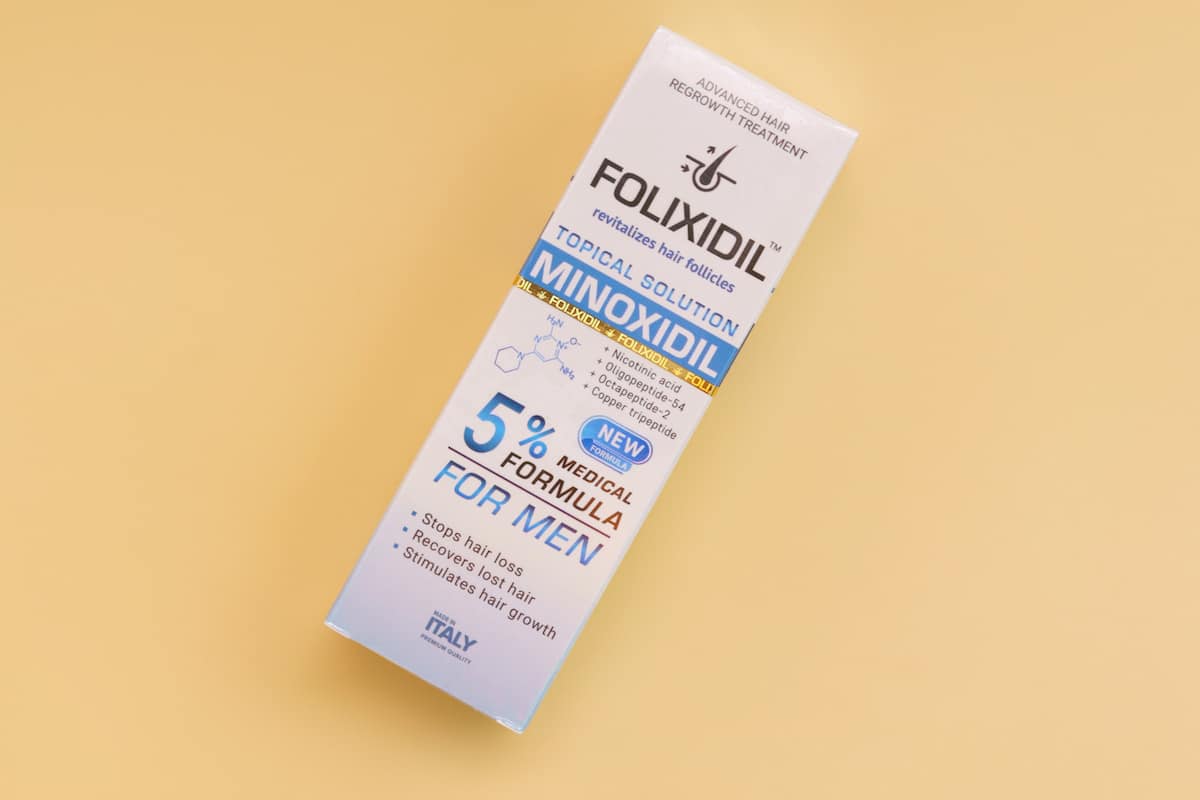
How it works:
- Increases blood flow to hair follicles
- Prolongs the growth phase of the hair cycle
By improving follicle activity, minoxidil may help promote hair growth in responsive individuals.
Key points:
- Available as foam or solution
- Requires consistent, long-term use
- Initial shedding may occur
- Results vary depending on individual response
Oral minoxidil is sometimes prescribed off-label under medical supervision, but it may carry additional risks.
Finasteride and DHT Reduction
Finasteride is an FDA-approved oral medication that reduces DHT production by inhibiting 5-alpha reductase.

How it works:
- Lowers scalp and serum levels of DHT
- Slows or stops follicle miniaturization
Important considerations:
- Effective for many men with androgenetic alopecia
- Possible side effects include sexual and mood-related changes
- Side effects are uncommon but should be discussed with a physician
- Not approved for use in women of childbearing potential
Dutasteride for Androgenetic Alopecia
Dutasteride is an oral medication originally approved for the treatment of benign prostatic hyperplasia (BPH). Although it is not FDA-approved for hair loss, it is sometimes prescribed off-label for androgenetic alopecia under medical supervision.
How it works:
- Inhibits both type I and type II 5-alpha reductase enzymes
- Results in a more pronounced reduction in DHT production compared to finasteride
- Significantly lowers scalp and serum levels of DHT
Because dutasteride blocks both enzyme types, it can suppress DHT more extensively than finasteride, which only inhibits type II 5-alpha reductase.
Effectiveness:
Some studies suggest dutasteride may be more effective than finasteride in slowing hair loss and supporting hair density in men with androgenetic alopecia.
It is generally considered in cases where hair loss is aggressive or when finasteride has produced insufficient results
Important considerations:
- Use for hair loss is off-label
- Potential side effects are similar to those of finasteride and may include sexual or mood-related changes
- Due to its longer half-life, side effects may persist longer after discontinuation
- Not approved for use in women of childbearing potential
Because of its potency, dutasteride should only be used after a thorough discussion with a qualified healthcare provider, weighing potential benefits against risks.
Ketoconazole Shampoo as an Adjunct Hair Loss Treatment
Ketoconazole is an antifungal agent with mild anti-androgenic properties.
Potential benefits:
- Reduces scalp inflammation
- May support other hair loss treatments
- Often used as an adjunct therapy
Medical-strength formulations should be used as directed to avoid scalp irritation.
Nutritional Supplements for DHT-Related Hair Loss
Certain supplements, such as saw palmetto, have been studied for their potential DHT-modulating effects.
In addition, dietary compounds found in pumpkin seeds and pumpkin seed oil have attracted interest due to their phytosterol content, which may modestly influence androgen activity in individuals with mild androgenetic alopecia.
Key notes:
- Evidence is mixed and less robust than prescription medications
- Supplements should not replace proven therapies
- Always consult a healthcare provider before use
Hair Transplant Surgery for Advanced DHT-Related Hair Loss
Hair transplant surgery is a surgical option for individuals with advanced hair loss who do not respond sufficiently to medical therapy.
How it works:
- Hair follicles resistant to DHT are transplanted to thinning areas
- Common techniques include Follicular Unit Extraction (FUE)
These transplanted follicles typically retain their resistance to DHT and can continue to promote hair growth in the recipient area.
Important considerations:
- Surgery does not stop future hair loss
- Medical therapy is often recommended alongside transplantation
- Results vary based on genetics, donor area quality, and surgical technique
A consultation with a qualified specialist is essential to determine candidacy.
Key Takeaways on DHT and Hair Loss
DHT plays a central role in the development of androgenetic alopecia in genetically predisposed individuals.
While hair loss caused by DHT is progressive, several evidence-based treatments can slow its progression and, in some cases, improve hair density and support partial hair regrowth.
Early intervention, realistic expectations, and medical guidance are key factors in managing hair loss effectively.
Frequently Asked Questions About DHT Hair Loss
What causes DHT-related hair loss?
DHT-related hair loss occurs when dihydrotestosterone binds to genetically sensitive hair follicles, leading to gradual miniaturization and shortened growth cycles.
Can DHT hair loss be reversed?
Hair loss may be slowed or partially reversed with treatment, particularly when addressed early. Advanced hair loss is more difficult to reverse.
Is DHT hair loss permanent?
Without treatment, androgenetic alopecia is typically progressive. Some follicles may permanently stop producing hair over time.
Do DHT blockers work for everyone?
No. Treatment response varies depending on genetics, age, consistency of use, and individual sensitivity to DHT.