


The topic of Steve Carell’s hair transplant has sparked interest for many years. Fans noticed clear changes in Steve Carell’s hair during his rise to fame. His hair became thicker, his receding hairline improved, and his overall hair density changed between early and later seasons of The Office. These signs often point to a hair restoration procedure or advanced cosmetic treatment.
In this article, we explore his hair timeline, what procedure he may have had, how recovery might have felt, and what options others can consider today.
Who Is Steve Carell?
Steve Carell is an American actor and comedian known for his role as Michael Scott in the hit TV show The Office. He also appeared in films like The 40-Year-Old Virgin, Foxcatcher, and Anchorman.
By the time he started the first season of The Office, many viewers noticed his receding hairline and thinning hair at the temples. Later seasons showed a fuller, healthier look, which led fans to ask: “Did Carell get a hair transplant?” This rapid improvement can usually only be due to modern hair restoration surgery.
How Has Steve Carell’s Hair Changed Over Time?
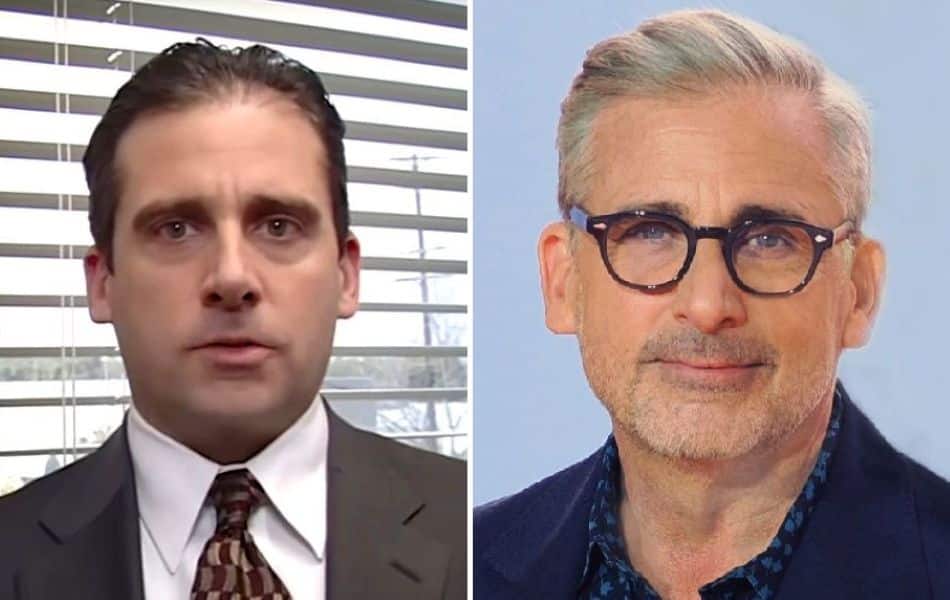
A close look at Steve Carell’s hair over the years provides some of the strongest clues about a possible Steve Carell hair transplant. His timeline shows a clear shift from visible thinning to a fuller, more natural hair appearance with strong hair density.
- Pre-2006: Photos from red carpet events and the first season of The Office show Carell with a noticeable receding hairline, likely between Norwood Stage 2 and 3. The thinning was most visible at the temples and frontal hairline. These patterns match common early-stage hair loss in men.
- 2006 (Between Seasons): The biggest change appears between seasons 1 and 2 of The Office. During this break, his hairline became straighter, fuller, and more youthful. Many experts suggest he may have used this hiatus for a hair restoration surgery, possibly a FUE procedure, which is popular because it leaves minimal scarring and no linear scar.
- Post-2006: From season 2 onward, Carell’s hair remains consistently thicker. The improved density and long-term stability for almost twenty years strongly match the results seen after a successful Carell’s hair transplant using modern techniques. His restored hairline also aligns with typical outcomes of transplanted hairs growing over 12–18 months.
Hair restoration experts generally agree that the level of improvement seen in his case is far beyond what non-surgical treatments can achieve.
What Type of Hair Transplant Procedure Might Steve Carell Have Had?
If Steve Carell did get a hair transplant, it would likely have been one of three primary methods: Follicular Unit Transplantation (FUT), Follicular Unit Extraction (FUE), or Direct Hair Implantation (DHI). All three are effective hair transplant surgery techniques.
FUT is an older hair transplant technique. It’s a method that removes a strip of skin from the donor area (the back of the head). Individual hair follicles are then harvested from this strip and implanted into the balding areas. While effective, FUT leaves a linear scar on the back of the head, which can be visible if hair is cut very short.
FUE is a more modern and popular technique that involves individually extracting hair follicles directly from the donor area. These individual hair follicles are then transplanted to the recipient sites. This method is common among celebrities with hair transplants because it leaves minimal scarring, avoids a linear scar at the back of the head, allows precise placement of hair follicles, and creates natural-looking results.
DHI is an advanced variation of the FUE method. Instead of creating incisions before implanting grafts, DHI uses a specialised implanter pen to place each follicle directly into the scalp. This allows even more control over angle, depth, and direction, helping achieve a very natural look.
Given the natural look of Carell’s hair transplant and its consistent hair density, a FUE hair transplant seems the most likely option.
What May Steve Carell Have Experienced During His Recovery?
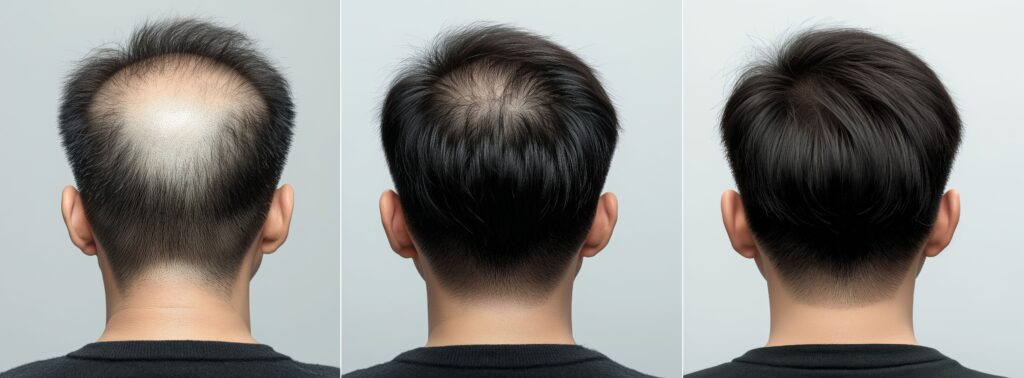
If Steve Carell did undergo a hair transplant surgery, his recovery likely followed the standard process for modern techniques like FUE hair transplant or Micro Sapphire DHI Method. Recovery experiences typically include:
- Initial Healing (Days 1-7): Immediately after the procedure, small scabs form around the newly transplanted hairs, and some swelling may occur. Protecting the delicate grafts is crucial during this phase.
- Shedding Phase (Weeks 2-8): Crusts naturally fall off. The transplanted hairs will typically fall out. This is a normal part of the process, making way for new, permanent hair growth. This period can be emotionally challenging, but it is temporary.
- Growth Phase (Months 3-6): New hair slowly begins to grow, initially fine and thin. Hair density gradually increases as healthy new strands form.
- Final Results (Months 6-12+): The new hairs gain thickness, density, and length, gradually achieving the desired natural hair look. Full results of a hair restoration procedure are usually visible between 12 and 18 months. Results often last decades with proper care.
Alternatives to a Hair Transplant and Which Type May Be Right for You
Not everyone is ready for a hair restoration procedure, and there are effective alternatives to consider. These options can help slow hair loss, improve hair density, or support existing hair follicles before committing to a full transplant.
Non-Surgical Alternatives
- Medications: Products like finasteride or minoxidil can help maintain existing hair and slow further thinning.
- PRP Therapy (Platelet-Rich Plasma): Uses your blood’s growth factors to strengthen hair follicles and promote healthier growth.
- Low-Level Laser Therapy: Stimulates blood flow in the scalp, supporting natural hair growth.
- Cosmetic Styling: Certain good haircuts and styling products can minimize the appearance of thinning or a receding hairline.
While these methods can be effective for maintenance or early-stage thinning, they usually cannot fully restore lost hair. For more permanent results, a hair transplant in Turkey may be necessary.
Conclusion
While Steve Carell has never publicly confirmed a hair transplant, the improvement in his hairline, density, and overall natural hair appearance strongly suggests a successful hair transplant. His transformation highlights how modern hair restoration procedures, like FUE or DHI Sapphire, can deliver long-lasting, natural results.
If you are considering your own hair restoration journey, choosing a trusted clinic with experienced surgeons is essential. Cosmedica Clinic in Istanbul offers state-of-the-art techniques, including Micro Sapphire DHI, personalized care, and support throughout recovery. Explore their hair transplant Turkey before and after gallery, learn about celebrity hair transplants, and check out Turkey hair transplant cost options to make an informed decision.
Take the first step toward restoring your hair and confidence today. Schedule a consultation with Cosmedica Clinic and discover which hair transplant procedure is right for you.