



Medically reviewed by Dr. Levent Acar, MD
Founder & Lead Hair Transplant Surgeon
Updated on: September 01, 2026
If month three felt like watching paint dry, month six is when the paint finally starts to show a color. By 6 months after hair transplant, the change is real and visible, but here is the catch most people miss: you are only at the halfway mark. New hair is coming through, the patchiness is fading, and the mirror is finally on your side. Let’s walk you through what is normal for your hair transplant timeline and what still lies ahead.
How Much Hair Growth Can I Expect 6 Months After Hair Transplant Surgery?
Quite a lot, honestly, compared to the frustrating early months post operation. By the six-month mark, most patients have visible hair growth, with the transplanted follicles producing real, thickening strands rather than wispy fuzz.
Here is roughly where things stand:
- Around 50 to 60% of the transplanted hair shafts has typically grown by now
- Hair grows at about 0.5 to 1.7 cm per month, so you will see real length
- The most significant growth tends to land between months four and eight
The hairline and temples usually lead the way. By six months, these areas often show a noticeable improvement, since vellus, the thin hairs, are turning into thicker terminal hairs. Source for the density and growth figures: Wimpole Clinic.
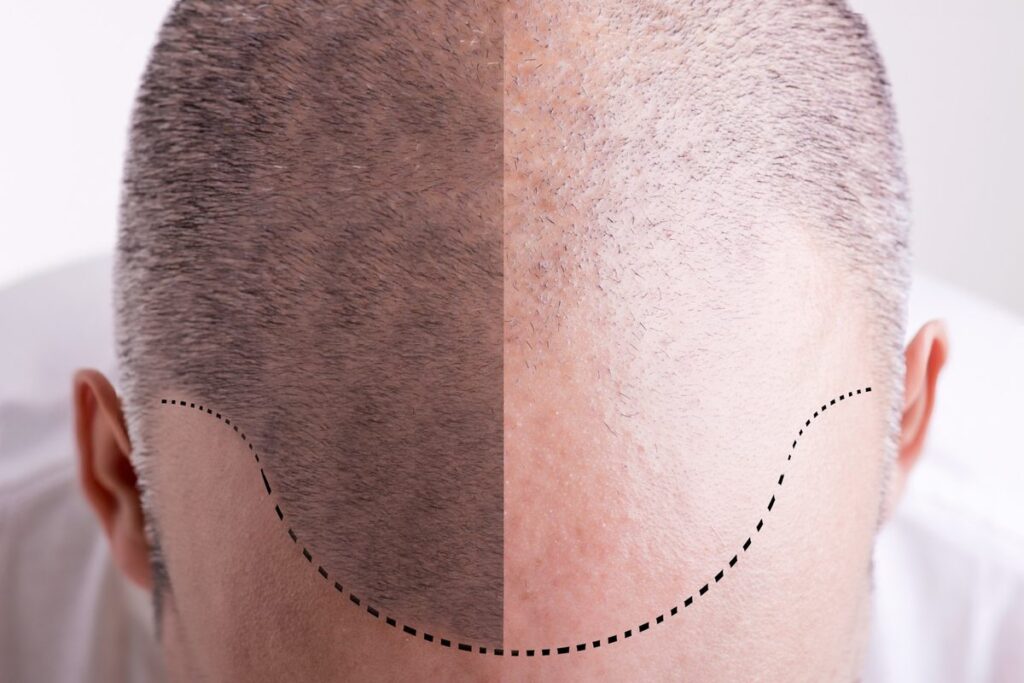
My Transplant Healing as It Should at 6 Months?
In almost every case, yes. The healing side of a hair transplant is long finished by now. Any redness, scabbing, or numbness from the minimally invasive procedure cleared up months ago, usually within the first few weeks.
What you are watching now is not healing but growth. The donor area has fully recovered, and the transplanted area is filling in. This is one reason a hair transplant in Turkey at a specialist clinic uses a minimally invasive approach for example, an FUE hair transplanr, since less trauma means a cleaner recovery. If your scalp feels and looks normal apart from new hair coming through, that is exactly what should be happening at this point.
Hair Transplant Shedding After 6 Months: What Does It Mean?
This one worries people, so let’s clear it up. The big shedding phase, the shock loss everyone dreads, happens in the first few weeks of post op and is long over by six months. It is part of the natural hair growth cycle, in which the old shaft falls out, and the hair follicle pushes out new growth.
A bit of ongoing hair shedding can still happen, though, and it is usually nothing to panic about:
- Some early thin hairs fall and are replaced by stronger ones
- A few native hairs near the transplanted area can shed and recover
- Heavy, sudden shedding is the exception, not the rule
If you are seeing major shedding this late, that is worth a word with your surgeon. Otherwise, light shedding is just the hair growth cycles doing their job.
What Happens If I Have No Density 6 Months After My Hair Transplant?
First, do not panic, and do not judge the whole thing yet. Density at six months is never complete. You are looking at roughly half of the final picture, so thin patches and uneven coverage are completely normal here.
A few reasons density can still look low:
- The transplanted follicles grow on their own individual timing, not all together
- The crown is slow, often lagging the front by months
- Early hairs are still thin and have not thickened yet
So a scalp that looks a bit sparse at this stage is not a failed result. It is an unfinished one. The hair density climbs steadily through the back half of the year. Looking at a hair transplant Turkey before and after gallery can help here, since it shows how much fills in between the six and twelve-month points. If genuinely nothing has grown by six months, that is the point to raise it with your clinic, not before.
Hair Transplant Side Effects After Six Months
By this stage, side effects are rare. The procedure itself is minimally invasive, and most of the minor effects people worry about belong to the first few weeks, not month six.
That said, a couple of things can linger or crop up:
- Occasional mild itching as new hair pushes through the skin
- Slight unevenness in texture or growth direction, which settles later
- Very rarely, ingrown hairs or small bumps as follicles surface
None of these is usually serious. If anything feels painful, spreads, or looks infected, that is a call to your surgeon rather than something to sit on. For most people, six months post-surgery is comfortable and uneventful.
How Can I Improve Results at 6 Months Post-Transplant?
There are real things you can do to support the result, though patience does most of the heavy lifting. The hair will come regardless, but good habits help it along.
Treatments and steps that can help:
- Medication such as minoxidil or finasteride, which your surgeon recommends, to protect native hair and support hair regrowth
- Platelet-rich plasma, or PRP, which some clinics use to encourage growth
- A decent diet, proper sleep, and not smoking, all of which support hair against further hair loss
- Being gentle with the area and following aftercare advice
It is worth talking to your clinic before adding anything new. The clinic you choose matters too. Cosmedica Clinic in Istanbul, for instance, uses the Micro Sapphire DHI method, a three-step technique with smaller incisions and a protected-graft implanter pen.

How Can I Improve Results at 6 Months Post-Transplant?
There are real things you can do to support the result, though patience does most of the heavy lifting. The hair will come regardless, but good habits help it along.
Treatments and steps that can help:
- Medication such as minoxidil or finasteride, which your surgeon recommends, to protect native hair and support hair regrowth
- Platelet-rich plasma, or PRP, which some clinics use to encourage growth
- A decent diet, proper sleep, and not smoking, all of which support hair against further hair loss
- Being gentle with the area and following aftercare advice
It is worth talking to your clinic before adding anything new. The clinic you choose matters too. Cosmedica Clinic in Istanbul, for instance, uses the Micro Sapphire DHI method, a three-step technique with smaller incisions and a protected-graft implanter pen.
How Can I Improve Results at 6 Months Post-Transplant?
There are real things you can do to support the result, though patience does most of the heavy lifting. The hair will come regardless, but good habits help it along.
Treatments and steps that can help:
- Medication such as minoxidil or finasteride, which your surgeon recommends, to protect native hair and support hair regrowth
- Platelet-rich plasma, or PRP, which some clinics use to encourage growth
- A decent diet, proper sleep, and not smoking, all of which support hair against further hair loss
- Being gentle with the area and following aftercare advice
It is worth talking to your clinic before adding anything new. The clinic you choose matters too. Cosmedica Clinic in Istanbul, for instance, uses the Micro Sapphire DHI method, a three-step technique with smaller incisions and a protected-graft implanter pen.
What Happens Between Months 6 and 12 Post-Transplant?
This is the good part. Growth is not linear, and it actually speeds up after the halfway point. The months after a hair transplant, between six and twelve, usually deliver the most satisfying change.
Roughly what to expect:
- Months 6 to 9, the most dramatic thickening and filling-in happens
- Hairs darken, gain caliber, and lose any early wiry texture
- The hairline sharpens and blends with your natural hair
- The crown keeps improving, sometimes right up to 18 months
By 12 months post-surgery, most patients reach close to their final hair transplant results, with natural hair that blends in and styles normally. According to the International Society of Hair Restoration Surgery, success rates at experienced clinics sit around 90 to 98%. Many people also check the Turkey hair transplant cost against their likely graft count while they plan the next stage.
FAQ Hair Transplant After 6 Months
Is it normal to still have patchy density at 6 months? Yes. Only about half the final density shows by six months. Patchiness evens out as the remaining follicles catch up over the following months, with optimal results closer to twelve.
Should all my transplanted hair have grown by now? Not all of it. Roughly 50 to 60% of transplanted follicles have grown at six months. The rest come through gradually, with the crown often the last to fill in.
Is shedding at 6 months a bad sign? Usually not. Light shedding, as thin hairs are replaced by stronger ones, is part of the hair growth cycle. Heavy, sudden shedding is uncommon and worth checking with your surgeon.
When will I see my final results? Most people reach close to final results around 12 months, with the crown sometimes taking up to 18 months. The visible improvement between months six and twelve is usually the biggest.