Adam Mellor's 3,900 Graft Hair Transplant: Hairline and Crown Results at 12 Months

Adam Mellor, 34, from England, underwent a 3,900 graft hair transplant using the Micro Sapphire DHI (Direct Hair Implantation) technique at Cosmedica Clinic in Istanbul on 2 December 2025. The procedure targeted his receding front hairline and a small crown area.

This case study follows his full recovery timeline, from surgery day through the 1, 3, 6, and 12-month marks, based on the video updates he shared throughout his journey, giving a transparent, unedited look at how a DHI result can progress in practice.

Before and after results of a 3900 grafts Micro Sapphire hair transplant at Cosmedica Clinic
Patient Adam Mellor, age 34, France
Technique Micro Sapphire DHI
Graft Count 3,900 grafts
Treated Areas Front hairline, small crown
Outcome Typically, progressive density along the hairline and small crown

Case at a Glance

Adam received 3,900 Micro Sapphire DHI grafts for his front hairline and small crown in a single session lasting approximately 7 hours. By his 12-month update after his hair transplant in Turkey, he reported full coverage, a natural hairline with no visible gaps, and no need for styling products to achieve a thick, even appearance.

As with any patient, individual results vary based on donor supply, hair characteristics, and how closely aftercare guidance is followed.

Patient Profile

At 34, Adam presented with a receding hairline and thinning in a small area of the crown, a pattern consistent with common genetic hair loss (androgenetic alopecia).

He had considered a hair transplant for some time and was encouraged to move forward after seeing the results a friend achieved at the same clinic.

As with any prospective patient, the extent and pace of future hair loss is something best discussed directly with a physician, since patterns of progression differ from person to person.

Photo of a man before a 3900 Micro Sapphire DHI hair transplant in Turkey at Cosmedica Clinic

Treatment Strategy: Why DHI and Why 3,900 Grafts

Before travelling, Adam sent photographs of his hair to the clinic’s team, who used them to provide an approximate cost estimate and graft projection. Following an in-person consultation upon arrival in Istanbul, the medical team confirmed a plan of 3,900 grafts using the Micro Sapphire DHI technique, split between the front hairline and the small crown area.

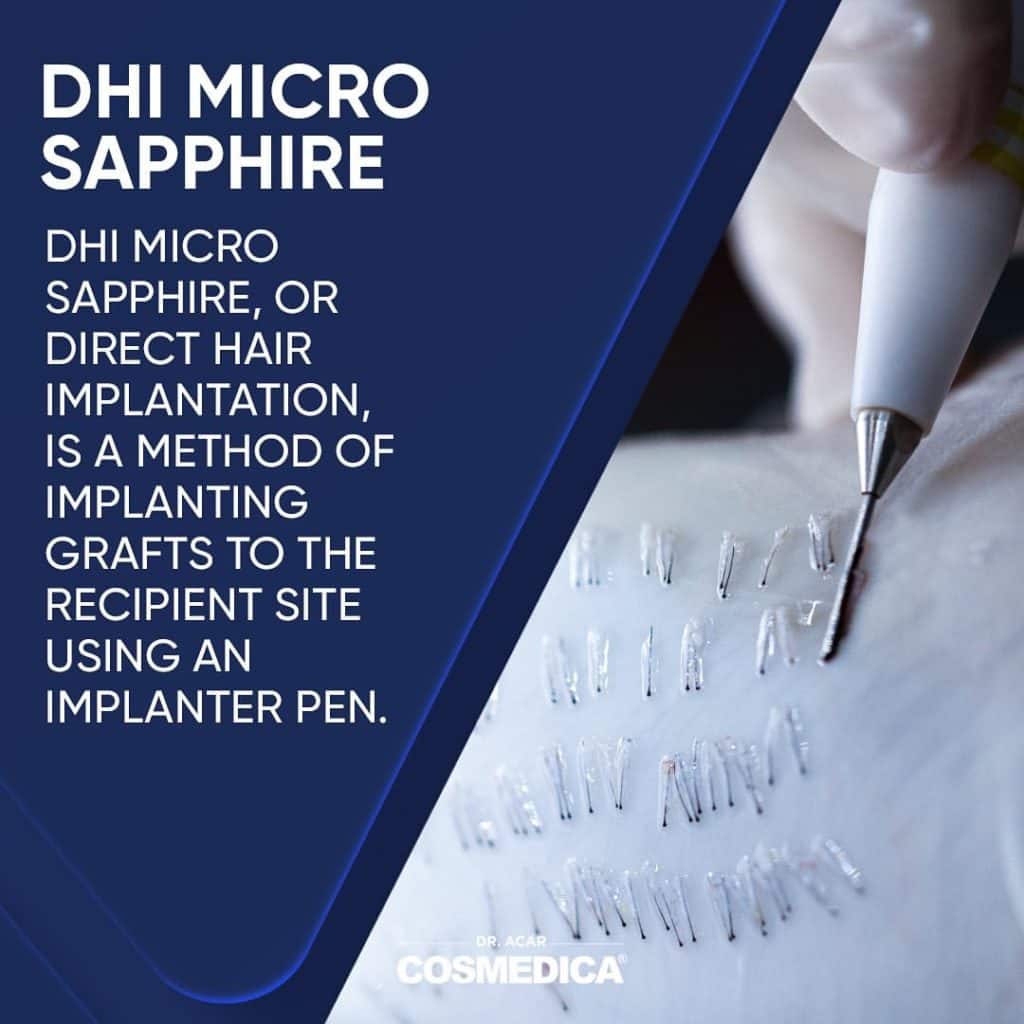
DHI uses a Choi Implanter Pen to place grafts directly into the scalp without pre-made incisions, which allows the medical team to control the angle, direction, and depth of each graft individually. For a case involving both the hairline and a crown area, this level of control supports a natural-looking transition between the two zones, an important consideration since the hairline and crown differ in natural hair direction and density.

Dr. Levent Acar notes that treatment plans combining the hairline and crown require careful graft distribution, since the donor area is a limited resource that should be managed with the patient’s overall pattern and any potential future needs in mind.

Photo of a man right after his 3900 grafts hair transplant in Turkey at Cosmedica Clinic
DHI Implanter pen and hair grafts

Procedure Day

On the morning of his procedure, Adam was collected by the clinic’s chauffeur service and taken to the clinic. The medical team drew his proposed hairline directly onto his forehead, and Adam helped adjust its position until he felt comfortable with the design and confident it would look natural.

Once the hairline was finalized, his hair was shaved in preparation for surgery. The procedure lasted approximately seven hours, with breaks built in, and the clinic provided food throughout. In total, around 3,900 grafts were implanted to address both the hairline and the crown.

Afterward, Adam experienced some soreness, mainly around the donor area at the back of his head, which he described as minor. He was given pain medication but said he didn’t feel he needed to use it that night, and he slept without significant issues at his hotel. The following day, he returned to the clinic for a follow-up check, where the treated area was inspected, washed, and redressed.

Patient Experience in Istanbul

Like most international patients at Cosmedica, Adam received complete English-language guidance throughout his stay: airport pickup, clinic transfers, translation services when needed, and personalized pre- and post-operative support.

This turnkey service simplifies the journey for patients visiting from abroad so they can focus on recovery rather than travel logistics.

Recovery Timeline

Month 1: Early Growth Begins

Around four weeks after surgery, Adam could already see early signs of new growth in both the hairline and crown areas. He also experienced some shedding, which he understood to be a normal and expected part of the healing process rather than a sign of a problem. He described his progress as encouraging and said he expected the transplanted hair to continue thickening over the next 1 to 2 months.

Month 3: Hairline Taking Shape

By three months, Adam reported that his recovery was progressing well, with noticeable growth along the front hairline, including visible improvement in the area that had previously formed a receding “M” shape. He was no longer experiencing significant pain or irritation, though the treated area remained slightly sore, which he attributed to the scalp adjusting after a long period without hair growth there. The hair was still too short and thin to style fully, and he estimated it would take another one to two months before styling would be practical.

Month 6: Visible Thickening

At six months, Adam recorded an update first thing in the morning, deliberately unstyled, to give an honest view of his progress. Despite describing his hair as “messy” in the video, the growth across the transplanted areas was clear and increasingly thick. He continued his aftercare routine, including saw palmetto, multivitamins, and clinic-recommended serums. A few grey hairs had also started to appear, which he considered a normal part of his natural hair pattern rather than a side effect of the transplant.

Month 12: Final Results

At his 12-month follow-up, Adam again left his hair completely unstyled to show the result naturally. He described his hair as thick, with no visible gaps, and felt the hairline continued to look natural and well-defined. He credited consistent aftercare, particularly ongoing use of saw palmetto, as an important part of his routine, noting a difference when he skipped it. He rated his overall experience 10 out of 10 and said he had since recommended the clinic to several friends.

Individual aftercare products, including supplements like saw palmetto, should be discussed with a physician, as their role and suitability can vary from person to person.

Request a free consultation

Please contact us for your questions about hair transplantation in Turkey or to receive a free assessment for your hair loss. Our team of highly trained experts will provide you with the necessary information.

Get an analysis and consultation with one of our hair transplant specialists.

FR Web Site - Form

  • This field is for validation purposes and should be left unchanged.
  • This field is hidden when viewing the form
Photo of a man one year after a 3900 Micro Sapphire DHI hair transplant in Turkey at Cosmedica Clinic

Key Takeaways from Adam's Case

Adam’s case reflects a few points that are broadly relevant for anyone considering a similar procedure:

  • Combined hairline and crown treatment requires careful planning. Because these zones differ in natural hair direction, a technique offering precise angle and depth control, such as DHI, can help support a more natural-looking transition.
  • Shedding in the early weeks is expected, not a sign of failure. Most patients see this resolve as new growth cycles begin.
  • Meaningful density typically takes time to appear. Adam’s own timeline, modest early growth, more visible thickening by six months, and a fuller result by twelve, is consistent with general DHI recovery patterns, though timelines vary by individual.
  • Aftercare consistency matters. Adam specifically noted a personal difference when he paused part of his routine, reinforcing the need to closely follow aftercare guidance from the clinical team.

Cost Considerations for a 3,900 Graft Hair Transplant

Hair transplant pricing depends on graft count, technique, and clinic location. As a general market comparison (verify current figures directly with any clinic before booking):

Region Typical price positioning for a comparable graft count
Istanbul, Turkey Roughly $2,200–$5,500 for a 4,000-graft session, often sold as an all-inclusive package. Several current clinic references place many 4,000-graft offers around $2,500–$4,000, with premium packages going higher.
United States Roughly $12,000–$20,000 for a 4,000-graft session, usually billed per graft and highly dependent on surgeon reputation, city, and technique.
United Kingdom Roughly $10,000–$22,000 for 4,000 grafts, generally in the mid-to-high range and often priced per graft.
Canada Roughly $10,000–$18,000 for 4,000 grafts, usually in the mid-to-high range and often comparable to the U.S., though sometimes slightly lower.
Australia Roughly $12,000–$20,000 for a 4,000-graft session, often among the highest due to fewer specialized clinics and higher local pricing.

Prices last verified August 2026. These figures are estimates and may vary depending on the clinic, graft count, and included services. For a custom quote of the Turkey hair transplant cost, a free hair analysis can provide an estimate tailored to your specific case.

FAQ: 5,600 Graft DHI Hair Transplant

Graft numbers vary significantly depending on the size of the areas being treated and the availability of donor hair. Adam’s case required 3,900 grafts; another patient with a different pattern may need more or fewer. A personalized consultation is the most reliable way to estimate this.

DHI can work well for combined cases because it allows precise control over graft angle and direction, which helps create a natural transition between zones with different natural hair growth

Procedure length varies by case, but a session of this size typically takes several hours, often completed in a single day with breaks built in.

Yes. Temporary shedding of transplanted or existing hair in the first few weeks is a normal part of the healing process and does not indicate the transplant has failed.

Most patients see continued density and texture development up to around 12 months, though full maturation can sometimes extend closer to 18 months depending on the individual.