



Medically reviewed by Dr. Levent Acar, MD
Founder & Lead Hair Transplant Surgeon
Updated on: September 01, 2026
The first week after a hair transplant in Turkey is the one that shapes everything that comes after. Most patients spend it anxious, second-guessing every itch and every scab, wondering if they’re doing something wrong. Usually they aren’t. But knowing what to expect at 7 days after a hair transplant makes the whole week a lot easier to get through. Here’s what actually happens, day by day, and what you should and shouldn’t be doing while it does.
Why Do the First Seven Days Matter So Much?
The implanted follicles aren’t anchored yet. Not fully. In the days immediately following hair transplant surgery, the newly transplanted hair sits in very fresh tissue, and the margin for error is smaller than it’ll ever be again. Knocking the scalp, scratching it, soaking it, or exposing it to direct sunlight after a hair transplant can all cause damage that affects long-term hair growth. The choices you make in week one matter more than at any other point in hair transplant recovery. That’s not an exaggeration.
What Happens Each Day in the First Week?
Recovery isn’t a flat line. Each day after the procedure feels a bit different, especially 7 days after the hair transplant. So, knowing what’s coming helps.
Day 1 after a hair transplant
You’ll leave the clinic with the recipient area covered. There’s likely some redness, tightness, and mild swelling. Sleeping with your head elevated, preferably with a neck pillow, that first night reduces fluid build-up around the forehead. Your postoperative instructions will tell you this, too, but it’s easy to forget when you’re tired.
Days 2 and 3 after a hair transplant
2 to 3 days after a hair transplant, you enter the resting phase. Swelling often peaks around day two or three and can move down toward the forehead and around the eyes in some patients. Uncomfortable, but normal. The donor area starts to feel tender. Don’t touch either zone more than necessary.
Day 4 after a hair transplant
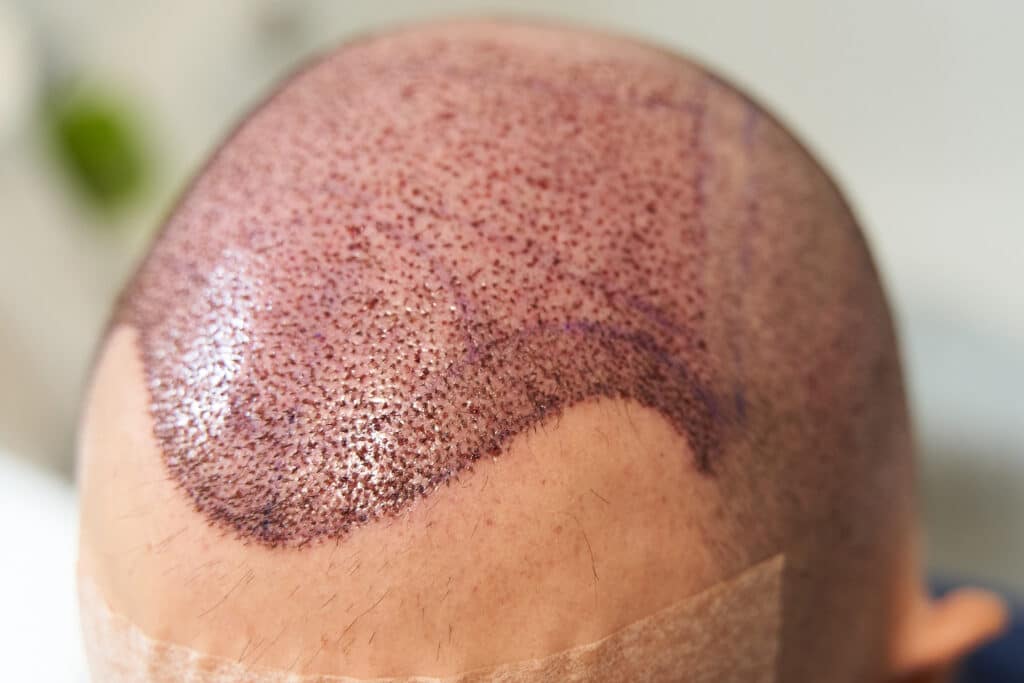
Scabbing is forming around the transplant areas. Leave it alone. These scabs protect the hair follicles beneath while the skin closes around them. Picking at them early is one of the most common mistakes patients make.
Days 5 and 6 after a hair transplant
The scabs are more visible now. Some clinics begin gentle washing protocols around day four or five. If yours does, follow the instructions exactly. Washing your hair too early or too roughly at this stage can pull grafts out. Gentle washing with a diluted, mild shampoo, applied by hand rather than any rubbing, is the only way to go.
Day 7 after a hair transplant
Most scabbing should be softening. If you’ve been washing carefully and consistently, some scabs will have started to shed naturally. The donor area feels less tender. The recipient area is still pink but looks less raw. You’re through the hardest part.
A look through hair transplant in Turkey before and after photos, specifically the early timeline ones, gives a realistic sense of what the scalp typically looks like at each stage.
Are the First Seven Days Different with DHI vs Sapphire FUE?
A bit, yes. Both methods are used at Cosmedica in Istanbul under Dr. Levent Acar, and the post op experience isn’t identical between them.
With FUE Sapphire, the incisions in the recipient area are made using a sapphire blade rather than a metal one. Sapphire creates smaller, cleaner cuts, which tend to mean less tissue trauma and slightly faster initial healing. Redness in the recipient area often resolves a bit sooner than with a standard metal-blade FUE hair transplant.
With Micro Sapphire DHI, the process is different again. Hair follicles are extracted and then implanted using a specialized DHI pen that holds each graft in a protected shield during insertion, which reduces handling and lowers the risk of root damage. Because no separate incision step is needed before implantation, the recipient area often looks less disrupted in the first few days after the procedure.
Both hair transplant procedures avoid the FUT strip method entirely, which means no linear scar in the donor area and a more straightforward early recovery overall.

What Should and Shouldn't You Do in the First Week?
The postoperative rules for the first seven days are fairly specific, and they exist for good reason.
- Do keep your head elevated when sleeping, at least for the first three to four nights. This limits swelling.
- Do start gentle washing when your clinic advises it, not before.
- Do take any prescribed medication, including antibiotics or anti-inflammatories, for the full course.
- Do The body is doing a lot of repair work, and physical stress on top of that slows it down.
- Don’t drink alcohol or smoke. Both restrict blood flow to the scalp and slow hair follicle recovery.
- Don’t exercise hard. Raised heart rate and sweat around the transplant areas are both problems in the first week.
- Don’t wear anything tight over your head. Don’t expose the scalp to direct sun. Even brief periods of strong sun exposure on freshly operated skin can cause irritation, affecting results.
- Don’t panic about shock loss if it starts. Some newly transplanted hair shedding in the first weeks is a normal part of the healing process, not a sign the procedure didn’t work.
What Warning Signs Should You Watch For?
Most of what happens in the first week is normal, even the stuff that looks alarming. But certain things do warrant a call to your clinic.
Watch for redness or swelling that keeps getting worse after day three rather than settling. Any discharge or oozing from the recipient or donor area beyond the first day warrants flagging. Pain that intensifies rather than eases over the course of the week isn’t normal. And a fever in the days after the procedure should always be checked.
Clinics like Cosmedica provide follow-up contact for exactly this reason. Part of what you’re paying for, whether you’re looking at the Turkey hair transplant cost or pricing elsewhere, is access to the surgical team after you go home. Use it if you need it.
Does Your Mindset in the First Week Actually Matter?
7 days after a hair transplant, mindset matters a lot. Patients who treat the first week as a proper recovery period, rather than trying to resume normal activity as fast as possible, tend to have better hair transplant results. That’s not a soft observation. It’s the difference between protecting implanted follicles during a vulnerable window and not.
The International Society of Hair Restoration Surgery (ISHRS) emphasises post operative care as one of the primary factors in graft survival. And the American Academy of Dermatology notes that hair growth after a transplant is a slow process that takes months to fully show, meaning the early investment in rest and care pays off a long time after the first week ends.
Think of it this way. The surgery takes hours. The hair restoration results take a year to fully develop. Seven days of careful recovery is a small ask by comparison. Go slow, follow instructions, and let the follicles do what they’re there to do.