



A hair transplant right after surgery can look more dramatic than many patients expect. The scalp may be red, sensitive and dotted with tiny scabs around the newly implanted grafts. There may also be mild swelling, tightness or tenderness during the first few days. In most cases, these early changes are part of the normal healing process.
The important point is that the final result is not visible immediately. A hair transplant develops gradually over months. The first days are mainly about protecting the grafts, keeping the scalp clean and following the aftercare instructions given by your medical team.
This guide explains what usually happens right after a hair transplant, how the first week develops, which symptoms are normal, what aftercare steps matter most and when you should contact your clinic.
What does a hair transplant look like right after surgery?
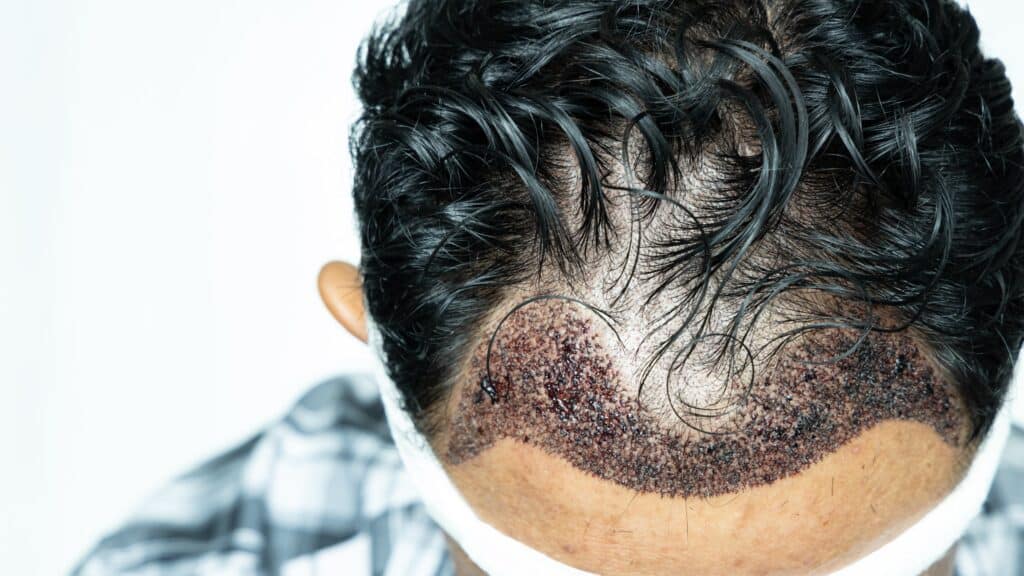
Right after a hair transplant, the recipient area usually shows many small red points where the grafts have been placed. The donor area may also look red or slightly swollen, especially after FUE hair transplant, where individual follicular units are removed from the back or sides of the scalp.
Some patients also notice small amounts of dried blood, fluid or crusting around the grafts. This can be unsettling, but it is expected in the first phase of healing. The transplanted hairs may be visible immediately, but they should not be judged as the final result. Many of these hairs shed later before new growth begins.
Common signs right after the operation include:
- redness in the recipient and donor areas;
- small scabs or crusts around the grafts;
- a tight or sensitive feeling on the scalp;
- mild swelling around the forehead or upper face;
- temporary numbness or tingling;
- visible short transplanted hairs in the treated area.
These early signs usually reduce over the first days and weeks. Recovery varies depending on the number of grafts, the technique used, scalp sensitivity and how closely the aftercare plan is followed.
Why are the first two weeks after a hair transplant important?
The first two weeks are the most delicate part of hair transplant recovery. The grafts need time to settle into the recipient area, and the scalp is still healing from thousands of tiny surgical openings. During this phase, patients should avoid rubbing, scratching, picking, heavy sweating, direct trauma and anything that could disturb the grafts.
The NHS notes that transplanted hair needs particular care during the first two weeks, and that patients may be advised to reduce exercise in the first month. Your own clinic's instructions should always take priority, because aftercare can vary depending on technique, graft count and individual healing.
At this stage, aftercare is not about forcing faster growth. It is about creating a stable healing environment so that the implanted grafts are protected while the scalp recovers.
Hair transplant recovery timeline: what happens when?
Hair transplant recovery has two separate parts: visible healing and hair growth. Visible healing usually happens within the first two weeks. Hair growth takes much longer, because the transplanted follicles need to move through the normal hair cycle before producing mature hair.
| Time after surgery | What usually happens | Main aftercare focus |
| First 24 hours | Redness, sensitivity, bandage or dressing, mild fluid or blood spots. | Rest, avoid touching grafts, keep the head elevated, follow medication instructions. |
| Days 2-3 | Swelling, tightness, redness and early crusting may become more visible. | Protect grafts, avoid bending, sleep carefully, follow clinic washing instructions. |
| Days 4-7 | Scabs and crusts are more noticeable. Itching may begin as the scalp heals. | Gentle washing, no scratching, no picking, avoid sweating and sun exposure. |
| Days 8-14 | Most scabs loosen and fall away. Redness may remain, especially on lighter skin. | Continue washing as instructed, avoid harsh styling and protect the scalp. |
| Weeks 2-8 | Transplanted hairs often shed. This can make the area look thinner temporarily. | Do not panic about shedding. Continue normal scalp care as advised. |
| Months 3-4 | Early new growth may begin, often as fine or uneven hairs. | Be patient. Growth is still immature and density is not final. |
| Months 6-12+ | Hair becomes thicker, stronger and more visible. Final density develops gradually. | Assess progress with follow-up photos and clinic reviews. |
Hair transplant recovery stages
The recovery stages below describe a typical pattern after a modern FUE or DHI hair transplant. They are not a substitute for medical advice. Some patients heal faster, while others have redness or sensitivity for longer.
Immediately after the procedure
Immediately after the operation, the scalp may feel numb from local anaesthesia. The recipient area will usually show tiny red dots, while the donor area may be covered or bandaged depending on the technique and clinic protocol. Some fluid, small spots of blood and mild swelling can occur.
You should not touch, rub or inspect the grafts with your fingers. The first hours are for rest. Patients are usually given written instructions covering medication, sleeping position, washing, travel, physical activity and what to do if symptoms feel unusual.
Days 1-2: initial healing
During the first two days, redness, swelling and tightness may be most noticeable. The forehead can also swell because fluid moves downwards with gravity. Sleeping with the head elevated can help reduce swelling and prevent accidental contact with the transplanted area.
If you have questions about discomfort, medication or what level of pain is normal, it is better to contact the clinic rather than adjust medication yourself. For a broader overview of discomfort after surgery, see our guide to hair transplant pain.
Days 3-4: washing usually begins
Many clinics allow or recommend gentle washing within the first few days, but the exact timing depends on the clinic's protocol. The goal is to clean the scalp without rubbing the grafts. Washing is usually done with lukewarm water, a mild product recommended by the clinic and very gentle pressure.
Avoid direct high-pressure shower spray on the recipient area. Do not use fingernails. Do not scrape crusts away. If you are unsure about washing technique, follow the step-by-step instructions in our guide to washing hair after a hair transplant.
Days 5-7: scabbing and itching
Scabs and crusts are often most visible during this phase. They form around the grafts as part of wound healing. Itching can also appear as the scalp recovers. This does not mean the transplant has failed, but scratching can damage the healing skin or disturb grafts.
The safest approach is to keep washing gently as instructed and allow scabs to soften and detach naturally. If itching becomes difficult to tolerate, contact the clinic before using additional products or medication.
Days 8-14: scabs fall away and redness fades
By the end of the second week, many patients have lost most visible scabs. The recipient area can still look pink or slightly red. Redness often lasts longer in patients with lighter skin or sensitive scalps. If redness becomes worse rather than better, or if it is accompanied by heat, pus, fever or increasing pain, contact your clinic.
For more detail on this symptom, see our article on redness after a hair transplant.
The first seven days after a hair transplant
The first week is when most aftercare mistakes happen. Patients often worry about appearance, scabs, sleep, swelling or accidental contact with the scalp. The safest approach is simple: follow the instructions, avoid unnecessary touching and do not try to speed up healing.
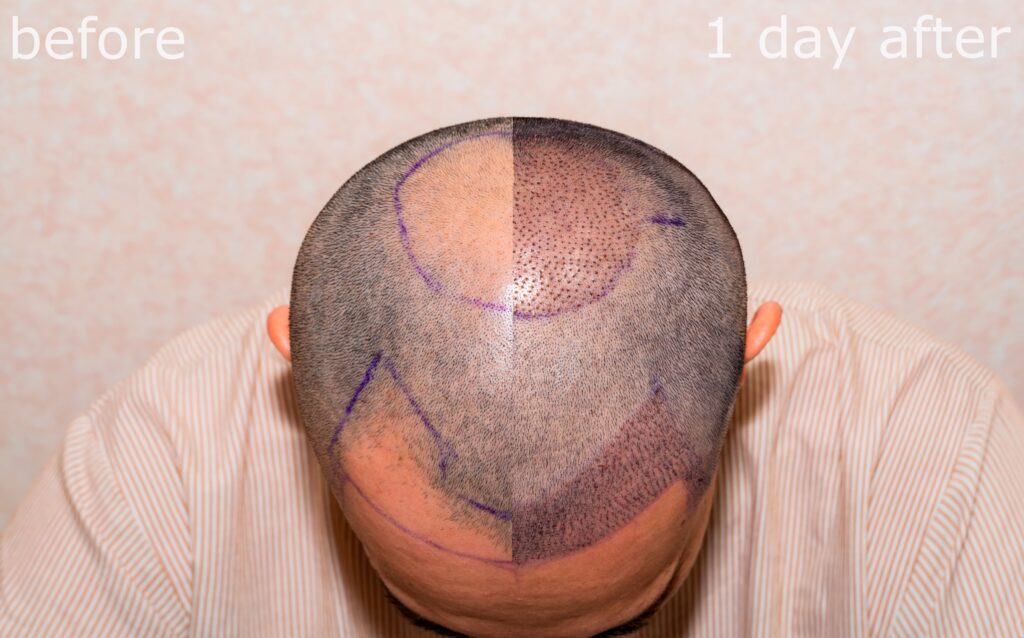
Day 1: rest and graft protection
The first day is mainly for rest. Keep your head elevated and avoid bending forward, heavy lifting, alcohol, smoking and unnecessary movement. Do not touch the recipient area. If there is a bandage on the donor area, leave it in place unless your clinic tells you otherwise.
Day 2: swelling may increase
Swelling can become more visible on the second day. This may affect the forehead and sometimes the area around the eyes. It is usually temporary. Continue sleeping carefully and avoid anything that increases pressure on the scalp, including intense activity, heat and bending for long periods.
Day 3: the scalp may feel tighter
The scalp may feel tight, itchy or slightly uncomfortable. Some patients are allowed to begin gentle washing around this time. Others may be told to wait slightly longer. Follow your clinic's exact timing rather than a generic online routine.
Day 4: gentle cleaning becomes important
Washing helps prevent excessive crust build-up. However, cleaning must be gentle. Do not rub the grafts. Use only the products and technique recommended by your clinic. If you had a high number of grafts or sensitive skin, your aftercare plan may be more cautious.
Days 5-6: scabs become more noticeable
Small scabs often become more obvious on days five and six. They may make the scalp look darker, uneven or rough. This is normally part of healing. Do not pick at them. Scabs should loosen gradually with proper washing.
Day 7: the scalp usually starts to look calmer
By day seven, swelling is usually reduced and the scalp may start to look calmer. Some redness and crusting may remain. It is still too early to judge the result, and the grafts should still be treated carefully.
What symptoms are normal after a hair transplant?
Some symptoms are expected after a hair transplant because the scalp has gone through a surgical procedure. Normal symptoms are usually mild to moderate and should gradually improve.
- Redness: common in the recipient and donor areas, especially during the first one to two weeks.
- Swelling: usually appears around the forehead and improves after a few days.
- Scabbing: expected around the grafts and usually loosens with gentle washing.
- Itching: common during healing, but scratching should be avoided.
- Numbness: temporary numbness or tingling can happen after local anaesthesia and micro-incisions.
- Shedding: transplanted hairs often fall out in the weeks after surgery before new growth begins.
Normal does not mean you should ignore all symptoms. If pain, swelling or redness is increasing instead of improving, or if you notice discharge, fever, strong odour or heavy bleeding, contact the clinic.
When does shedding start after a hair transplant?
Shedding often begins between two and eight weeks after surgery. This can feel discouraging because the transplanted area may look thinner again. However, this usually affects the visible hair shafts rather than the transplanted follicles themselves.
The American Academy of Dermatology explains that transplanted hair commonly falls out between two and eight weeks after surgery, and that the hair may look thinner by the third month before new growth develops. This is one reason why early photos should not be used to judge the final outcome.
For a more detailed explanation, read our guide to hair shedding after a hair transplant.
When will new hair start to grow?
New hair growth usually starts around the third or fourth month, although the first hairs can be thin, fine and uneven. From six months onwards, many patients begin to see clearer changes in density and coverage. The final result often takes 10 to 18 months, especially when the crown area is treated.
Growth does not happen evenly across the scalp. The hairline may develop earlier than the crown. Some areas can look patchy before they thicken. This is why consistent follow-up photos are more useful than checking the mirror every day.
If you want to compare realistic results, visit our hair transplant before and after page.
Hair transplant aftercare: what should you do?
Aftercare instructions vary between clinics, but most plans focus on the same principles: protect the grafts, keep the scalp clean, reduce swelling, avoid infection risk and prevent avoidable trauma to the recipient area.
Sleep with your head elevated
During the first nights, sleep with your head elevated and avoid direct contact between the recipient area and the pillow. This reduces swelling and lowers the risk of rubbing the grafts while sleeping. A neck pillow can help keep the head stable.
More detailed guidance is available in our article on sleeping after a hair transplant.
Wash only as instructed
Washing should be gentle and controlled. The aim is to soften crusts and keep the scalp clean, not to scrub the grafts. Do not use harsh shampoos, styling products or direct pressure unless your clinic says it is safe.
Avoid strenuous exercise at first
Exercise can increase sweating, blood pressure and the risk of accidental contact with the scalp. Most patients should avoid strenuous activity during the early recovery phase. Your clinic may give different timelines for walking, gym training, running, swimming and contact sports.
For a fuller breakdown, see exercise after a hair transplant.
Protect the scalp from sun exposure
The treated scalp is sensitive after surgery. Direct sun exposure can irritate healing skin and may worsen redness or pigmentation. Avoid strong sun during early recovery and follow your clinic's advice on when and how to wear a loose hat.
If you need practical advice on headwear, see our guide to wearing a hat after a hair transplant.
Avoid alcohol and smoking during early recovery
Alcohol and smoking can interfere with general healing and may increase avoidable risks during the early post-operative period. Follow your clinic's instructions on when it is safe to resume them. For more detail, read our guide to alcohol after a hair transplant.
Do not judge the result too early
The first weeks are not representative of the final result. Scabs, redness and shedding are temporary. The transplanted follicles need months to produce visible, mature growth. Early panic often comes from expecting the final result too soon.
What should you avoid right after a hair transplant?
Many complications are linked to avoidable aftercare mistakes. The main risk in the first days is disturbing the grafts or irritating the healing scalp.
- Do not scratch or pick scabs.
- Do not rub the recipient area with a towel.
- Do not use unapproved shampoos, oils or styling products.
- Do not wear tight hats or helmets too early.
- Do not expose the scalp to strong sun, sauna heat or steam rooms.
- Do not swim until the clinic confirms it is safe.
- Do not return to intense exercise too soon.
- Do not panic if transplanted hairs shed in the following weeks.
If you are unsure whether an activity is safe, ask the clinic first. Small precautions in the first two weeks can prevent unnecessary problems.
When should you contact the clinic?
Contact your clinic if symptoms feel unusual, worsen suddenly or do not match the recovery instructions you received. It is better to ask early than to wait if something feels wrong.
You should contact the clinic promptly if you notice:
- increasing pain that does not improve with prescribed medication;
- heavy or persistent bleeding;
- pus, strong odour or signs of infection;
- fever or feeling generally unwell;
- swelling that becomes severe or continues to worsen;
- accidental trauma to the recipient area;
- a sudden change that concerns you.
The NHS also advises contacting the clinic as soon as possible if severe pain or unexpected symptoms occur after a hair transplant.
How does aftercare affect the final result?
The final result depends on many factors: donor hair quality, hair loss pattern, graft survival, surgical planning, implantation angle, density, hairline design and long-term hair loss management. Aftercare cannot change your donor capacity, but it can help protect the work that has been done.
Good aftercare reduces avoidable irritation, trauma and infection risk. It also helps patients understand the difference between normal shedding and real warning signs. For patients who want to understand graft planning before surgery, our hair graft calculator can provide a first orientation.
Patients should also remember that existing non-transplanted hair can continue to thin over time. A natural-looking long-term result depends on planning the transplant around the patient's likely future hair loss, not only the current thinning area.
What happens to the donor area after surgery?
The donor area is where grafts are taken from, usually the back and sides of the scalp. Right after surgery, it may feel sore, tight or sensitive. Tiny extraction points are usually visible after FUE. These heal gradually and normally become far less noticeable as the scalp recovers.
Do not neglect donor-area care. It should be cleaned and protected according to the clinic's instructions, just like the recipient area. For more detail, read our guide to the hair transplant donor area.
When can you see the final before and after result?
Most patients need several months before they can properly judge the change. Early photos show healing, not the final outcome. The result becomes easier to assess once the new hair has grown, thickened and blended with the existing hair.
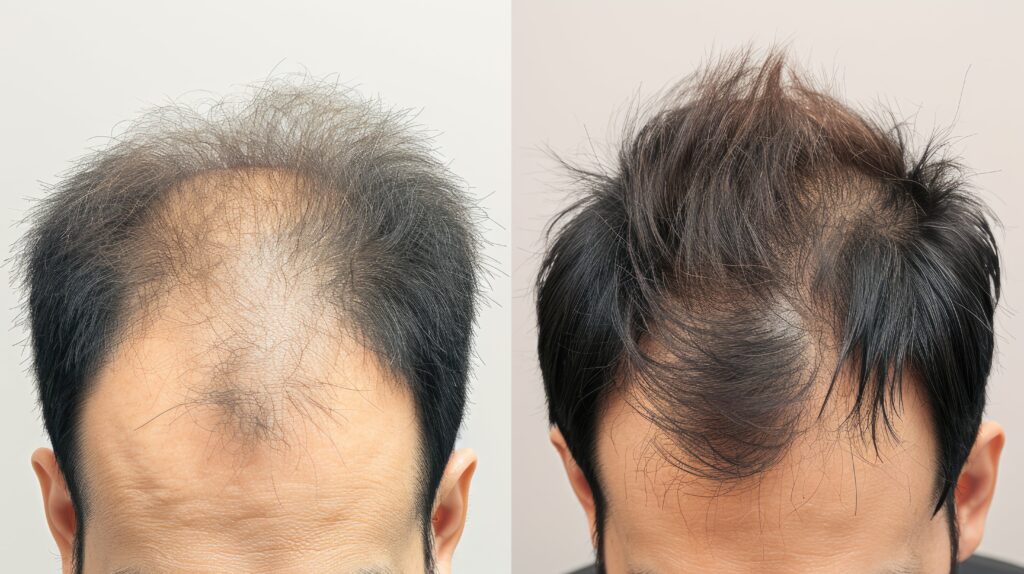
As a general rule, the first visible growth may appear around three to four months. More noticeable density often develops from six months onwards. The final result can take 10 to 18 months, especially for crown work. The American Academy of Dermatology notes that many patients see results between six and nine months, while some need 12 months.
For cost planning and package details, visit our hair transplant cost in Turkey page. If you are comparing graft numbers, you may also find our guide on how many hair grafts are needed useful.
Get expert aftercare advice at Cosmedica Clinic
Hair transplant recovery is a gradual process. The first days focus on protecting the grafts and allowing the scalp to heal. The following weeks may include shedding, and visible growth usually takes months. Clear aftercare instructions and realistic expectations make this process easier to manage.
Cosmedica Clinic in Istanbul provides hair transplant procedures such as Sapphire FUE hair transplant and Micro Sapphire DHI hair transplant. Patients receive guidance before and after surgery so they understand how to care for the scalp during the healing period.
If you are considering a hair transplant, you can start with a free hair analysis or read more about what happens during a hair transplant consultation.
FAQs about hair transplant right after surgery
What is normal right after a hair transplant?
Redness, mild swelling, tightness, sensitivity, small scabs and temporary numbness are common right after a hair transplant. These symptoms should usually improve gradually during the first days and weeks.
Can I touch my grafts after a hair transplant?
You should not touch, rub or pick at the grafts during the early recovery phase. The first two weeks are especially important because the grafts are still settling and the scalp is healing.
When can I wash my hair after a hair transplant?
Many clinics allow gentle washing within the first few days, but the exact timing depends on your clinic's protocol. Always follow the washing instructions given by your medical team.
Is scabbing normal after a hair transplant?
Yes, scabbing is a normal part of healing. Small crusts often form around the grafts and usually loosen with gentle washing. Do not scratch or pick them off.
When do transplanted hairs fall out?
Transplanted hairs often shed between two and eight weeks after surgery. This is usually temporary and affects the hair shaft rather than the transplanted follicle.
When does new hair grow after a hair transplant?
Early new growth often begins around the third or fourth month. More visible density usually develops from six months onwards, while the final result may take 10 to 18 months.
When can I exercise after a hair transplant?
Light walking may be possible early, but strenuous exercise should usually be avoided during the initial recovery period. Your clinic should confirm when running, gym training, swimming and contact sports are safe again.
When should I contact the clinic after a hair transplant?
Contact the clinic if you have severe pain, heavy bleeding, pus, fever, worsening swelling, increasing redness, signs of infection or accidental trauma to the transplanted area.